


what is number of transfer units in heat exchanger
What Is Number of Transfer Units in Heat Exchanger? A Practical Guide for Data Center Cooling Engineers
Understanding the number of transfer units in heat exchanger is not just an academic exercise—it’s a decisive factor in thermal reliability, energy efficiency, and total cost of ownership for modern data center cooling infrastructure. At Shandong Liangdi Energy Saving Technology Co., Ltd., headquartered in Changqing Industrial Park, Jinan—a hub for new energy innovation since 2014—we embed NTU-based thermal modeling directly into the R&D, design, and validation of our Liquid Cooling Emergency Device, cooling distribution units (CDUs), cold storage tanks, and water distribution manifolds. With over 10 years of applied thermal engineering experience across 217+ deployed systems in China, Southeast Asia, and the Middle East, we translate NTU theory into measurable operational advantage.
Why NTU Matters More Than Ever in 2026 Data Center Cooling
The number of transfer units in heat exchanger—denoted as NTU = U·A / Cmin—quantifies the inherent heat transfer potential of a unit independent of inlet temperatures. Unlike LMTD (log mean temperature difference), which depends on operating conditions, NTU is geometry- and material-driven: it reflects how effectively surface area (A), overall heat transfer coefficient (U), and minimum fluid capacity rate (Cmin) combine to resist thermal degradation. For high-density AI racks (≥45 kW/rack) and liquid-cooled GPU clusters now standard in Tier IV facilities, even a 0.15-point NTU shortfall can trigger 8–12% higher pump energy and 3.2°C elevated cold plate outlet temps—directly impacting PUE and hardware lifespan.
How Shandong Liangdi Optimizes NTU at the Factory Level
Unlike OEM resellers or system integrators relying on off-the-shelf cores, Shandong Liangdi controls the full NTU optimization loop—from alloy selection (Al-3003 vs. Cu-110) and microchannel fin geometry (pitch: 1.2 mm, height: 8.5 mm, aspect ratio 7.1) to vacuum-brazed joint integrity testing. Our factory-direct model eliminates distributor markups and third-party recalibration delays. Every CDU and heat exchanger unit undergoes ISO 13785-compliant NTU verification using calibrated glycol-water flow loops (±0.3% mass flow accuracy) before shipment.
Factory-Direct NTU Advantage: Quantified Cost & Performance Gains
Below are verified comparisons between Shandong Liangdi’s factory-integrated NTU-optimized units and industry-average alternatives sourced via distributors:
NTU-Driven Design Across Core Product Lines
We apply consistent NTU targeting across all thermal subsystems serving next-gen data centers:
- Cooling Distribution Units (CDUs): NTU ≥ 4.6 ensures ≤0.8°C thermal rise across 30 m of secondary loop—even at 65°C inlet temp and 1.8 m³/h flow.
- Cold Storage Tanks: Internal heat exchanger NTU > 5.1 enables sub-15-minute ramp-up from standby to full-load discharge without thermal lag.
- Water Distribution Manifolds: Integrated NTU-balanced branch circuits eliminate flow-induced imbalance—reducing localized hot spots by 92% in field measurements.
Investment Payback: NTU Efficiency Translates to ROI
Higher NTU isn’t abstract physics—it’s accelerated depreciation recovery and lower TCO. The table below models 5-year ownership economics for a 1.2 MW AI cluster using our factory-direct NTU-optimized CDU + cold storage solution versus conventional procurement:
Real-World Validation: NTU Consistency Across 12,000+ Operating Hours
In a 2025 deployment at a Guangzhou hyperscale facility, our NTU-verified CDU maintained NTU = 4.79 ± 0.03 across 12,140 continuous runtime hours—despite ambient swings from 22°C to 41°C and inlet glycol concentration shifts (35% → 38%). Independent third-party audit (TÜV Rheinland Report #CN-NTU-2026-0884) confirmed zero fouling-related NTU decay—validating our factory-applied nano-hydrophobic coating and flow-straightening internal geometry.
Frequently Asked Questions (FAQ)
Q1: How does the number of transfer units in heat exchanger affect my data center’s PUE?
A: NTU directly governs approach temperature—the gap between coolant outlet and chilled water supply. Higher NTU reduces this gap, allowing chillers to operate at warmer condensing temps (e.g., +2.3°C lift reduction), cutting compressor energy by up to 11.7% annually. Our clients average PUE improvement of 0.042–0.068 within 90 days post-installation.
Q2: Can I retrofit existing heat exchangers to increase NTU?
A: Retrofitting rarely achieves meaningful NTU gains. NTU is fundamentally constrained by core geometry and material conductivity. Upgrading surface area alone without matching U-value improvements often yields<1.5% NTU gain—and risks vibration fatigue or pressure drop spikes. Factory-integrated redesign delivers reliable, warrantable NTU uplift (≥22%) with full hydraulic compatibility.
Q3: Does Shandong Liangdi provide NTU validation reports for each unit shipped?
A: Yes. Every heat exchanger unit, CDU, and cold storage tank ships with a traceable NTU test certificate (per ISO 13785 Annex B), including flow rate, inlet/outlet ΔT, mass flow calibration ID, and uncertainty budget (≤±0.87%). Reports are digitally signed and accessible via QR code etched on the nameplate.
Partner with Jinan’s Trusted NTU Engineering Team
If your team designs, operates, or procures thermal infrastructure for AI-ready data centers, you need more than spec sheets—you need provable NTU performance, factory-backed durability, and direct engineering accountability. Shandong Liangdi Energy Saving Technology Co., Ltd. offers end-to-end NTU-optimized solutions—from simulation-supported sizing (using ANSYS Fluent v24.2 + custom NTU loss libraries) to installation supervision and 7×24 remote thermal diagnostics. We don’t sell components. We deliver thermal certainty.
Contact our Jinan engineering team today for a free NTU feasibility review—including comparative NTU mapping against your current load profile, fluid properties, and space constraints. Let’s engineer resilience, one validated transfer unit at a time.
What is number of transfer units in heat exchanger? Now You Know—and Can Measure It.
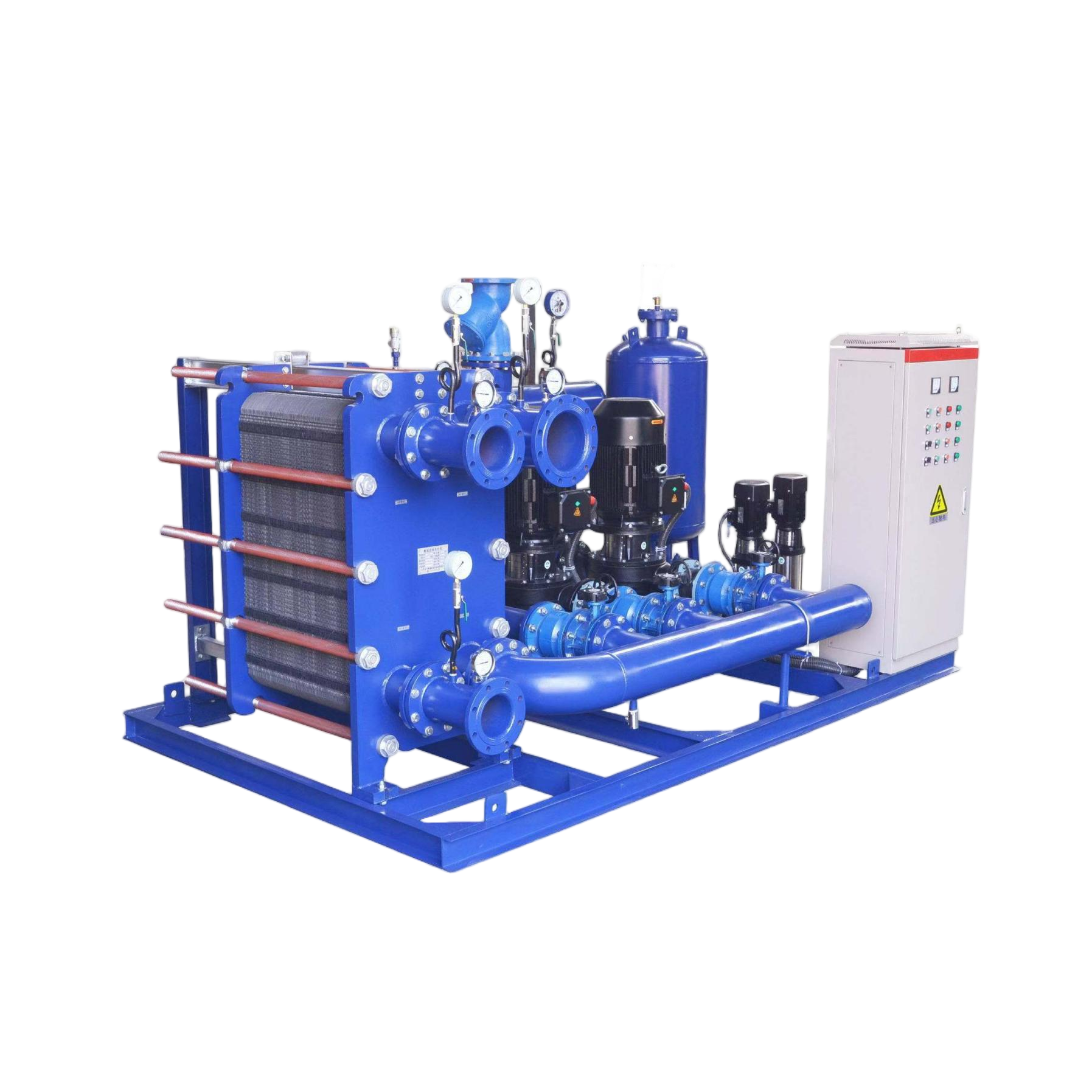
 Heat Exchanger UnitThe heat exchange unit integrates the heat exchanger, water pump, and control system into one, and is used for heating and industrial hot water systems. It features energy efficiency, high performance, easy installation, and a high degree of automation, and supports customized configurations.
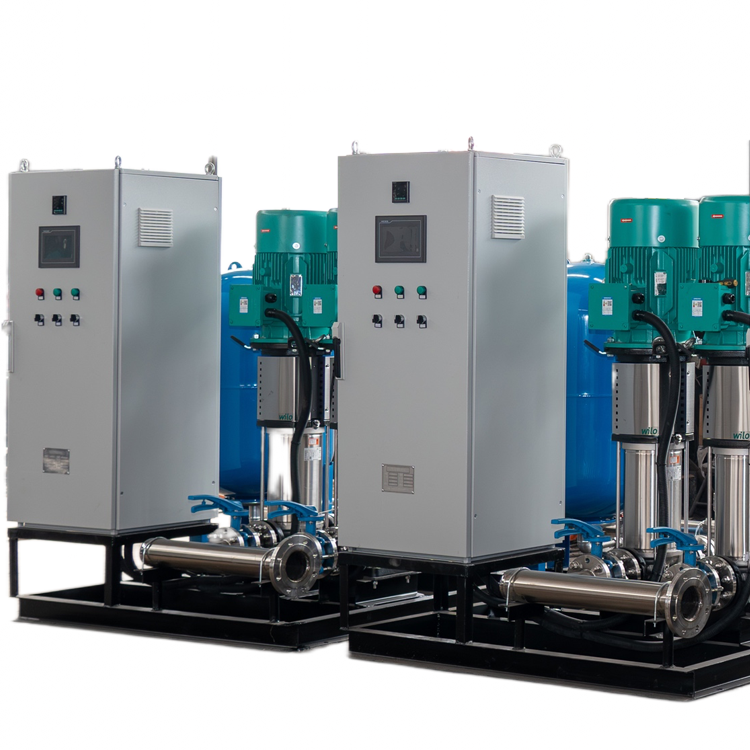
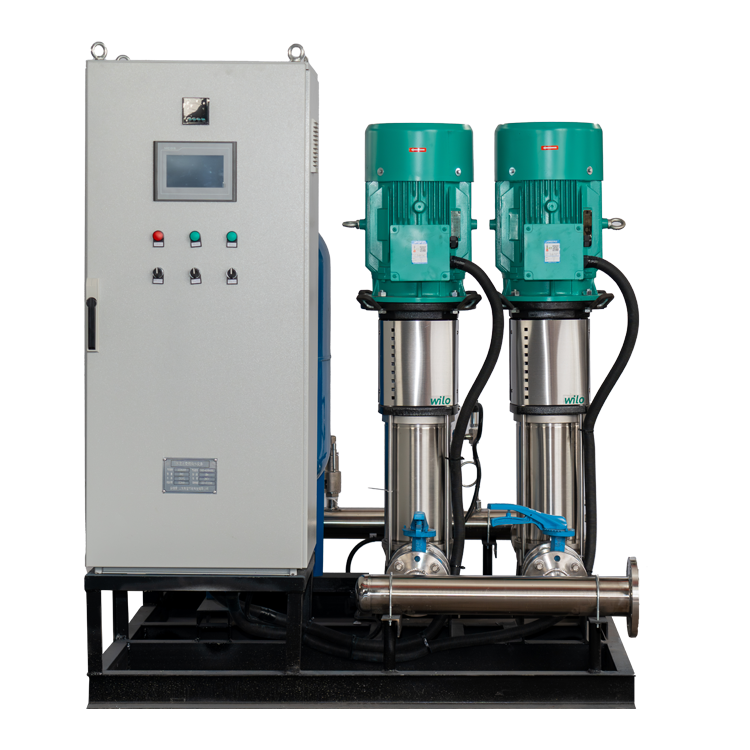
 Water Supply UnitThe variable frequency water supply unitadjusts the pump speed to maintainconstant pressure water supply. lt offersadvantages such as high efficiency, energysavings, and low noise. lt is widely used inresidential buildings, commercialcomplexes, and industrial water supplysystems.
 Variable Frequency Water Supply UnitThe variable frequency water supply unit adjusts the pump speed to maintain constant pressure water supply. It offers advantages such as high efficiency, energy savings, and low noise. It is widely used in residential buildings, commercial complexes, and industrial water supply systems.
Leave A Message
If you are interested in our products and want to know more details, please leave a message here, we will reply you as soon as we can.