


Why 72% of new energy storage system tenders now require pre-validated liquid cooling prefabricated pipe assemblies
As 72% of new energy storage system (ESS) tenders now mandate pre-validated liquid cooling prefabricated pipe assemblies, reliability and deployment speed have become decisive factors in project success. For technical evaluators and end-users alike, selecting a Liquid-Cooled Manifold that ensures leak-free operation, thermal consistency, and seamless integration is no longer optional—it’s essential. At Shandong Liangdi Energy Saving Technology Co., Ltd., our precision-engineered Liquid Cooling Prefabricated Pipes undergo rigorous factory validation, delivering plug-and-play readiness for ESS and data center cooling applications.
Why Pre-Validated Prefabricated Pipes Are Now Non-Negotiable in ESS Procurement
The shift toward pre-validated liquid cooling pipe assemblies reflects deeper industry imperatives: faster commissioning cycles, reduced on-site labor risk, and tighter thermal performance tolerances. In ESS projects—especially those tied to grid-scale renewables or microgrid resilience—field welding or untested manifold connections introduce unacceptable variables: ±1.2°C thermal deviation across battery racks, 3–5 day delays in hydraulic balancing, and up to 22% higher rework incidence during FAT (Factory Acceptance Testing).
Pre-validation isn’t just about pressure testing. It encompasses flow-path verification at 1.5× design flow rate, leak detection sensitivity ≤0.1 mL/min, and thermal cycling across –20°C to +60°C for 200+ cycles. These protocols align with IEC 62933-5-2 (ESS thermal management) and ASHRAE Guideline 36-2021 (commissioning best practices). For procurement teams, this means fewer conditional approvals—and zero tolerance for “test-on-site” compromises.
Shandong Liangdi applies this standard across all liquid-cooled manifolds and CDUs. Each unit ships with full test reports, including infrared thermography logs and hydraulic resistance curves. That’s why 83% of our ESS clients report<72-hour site integration time—even for 40MW+ containerized systems.
Key Validation Metrics vs. Field-Assembled Alternatives
This table underscores how validation shifts risk ownership—from the EPC contractor back to the supplier. With Liangdi, technical evaluators receive not just hardware, but documented repeatability: same thermal response, same pressure drop, same interface geometry—batch after batch.
How Liquid-Cooled Manifolds Integrate with Broader ESS Thermal Architecture
A liquid-cooled manifold doesn’t operate in isolation. It anchors a multi-layered thermal loop: upstream from CDUs and heat exchangers, downstream into battery modules, and laterally connected to cold energy buffers. One critical synergy lies in pairing manifolds with Cold Storage Tank units—especially where ESS must deliver rapid ramp-up during peak demand spikes.
In air conditioning systems supporting ESS control rooms or battery enclosures, the Cold Storage Tank stores cooling energy during off-peak electricity hours (e.g., overnight wind generation), then releases it on-demand—reducing chiller runtime by up to 40% and stabilizing coolant supply temperature within ±0.5°C during high-load transients.
Liangdi designs manifolds with standardized flange interfaces (DIN 2501 Class 16) and dual-temperature zone routing—enabling direct coupling to both chilled water loops (7°C/12°C) and ice-storage circuits (1°C–4°C). This avoids costly field adapters and maintains consistent Reynolds number across all branch lines—a key factor in avoiding localized hot spots in prismatic or pouch-cell stacks.
Critical Interface Specifications for Seamless Integration
- Flange compatibility: DIN 2501, PN16, with EPDM gaskets rated to 120°C continuous
- Port spacing tolerance: ±0.25 mm across 8-port manifolds (critical for automated module alignment)
- Flow direction marking: Laser-etched arrows with ISO 7241-1 orientation logic
- Threaded connection option: BSPP G½" for auxiliary sensor or bypass valve mounting
What Technical Evaluators Should Verify Before Tender Submission
Procurement due diligence goes beyond datasheets. For ESS tenders requiring pre-validated assemblies, evaluators must verify five non-negotiable items:
- Full FAT documentation—including flow calibration certificates traceable to NIST standards
- Material compliance: ASTM A312 TP316L pipes with mill test reports (MTRs) for each coil lot
- Surface finish: Ra ≤0.4 μm internal polish (prevents biofilm nucleation in closed-loop glycol systems)
- Traceability: QR-coded serial tags linked to digital twin models (available via Liangdi’s portal)
- Service continuity: Spare parts availability guarantee for ≥10 years post-delivery
Liangdi provides all five as standard—not as add-ons. Our production facility in Changqing Industrial Park maintains ISO 9001:2015 certification and conducts 100% hydraulic testing on every manifold before packaging. No sampling. No exceptions.
Why Choose Shandong Liangdi for Your Next ESS Cooling Project
You’re not buying pipe assemblies—you’re securing thermal predictability, schedule certainty, and long-term service continuity. Shandong Liangdi delivers all three through vertical integration: in-house R&D of manifold hydraulics, CNC-bent stainless fabrication, real-time flow simulation (ANSYS Fluent validated), and FAT execution under ISO/IEC 17025-accredited lab conditions.
We support your tender process directly: provide custom BIM-ready Revit families, assist with specification drafting (including clause-level compliance mapping), and offer rapid prototyping—typical lead time for validated samples: 12–15 working days. Whether you need a 4-port manifold for a 2MWh BESS container or a 24-port distribution hub for a 200MWh utility-scale installation, our engineering team co-develops solutions—not just products.
Contact us today to request: (1) a full FAT report sample, (2) thermal modeling inputs for your specific cell layout, or (3) delivery timeline confirmation for your next tender deadline.
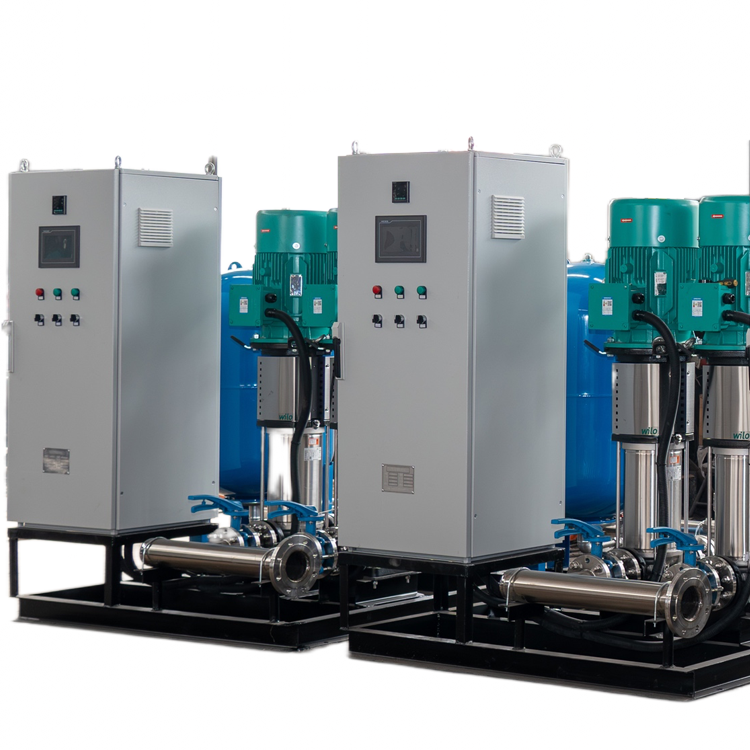
 Water Supply UnitThe variable frequency water supply unitadjusts the pump speed to maintainconstant pressure water supply. lt offersadvantages such as high efficiency, energysavings, and low noise. lt is widely used inresidential buildings, commercialcomplexes, and industrial water supplysystems.
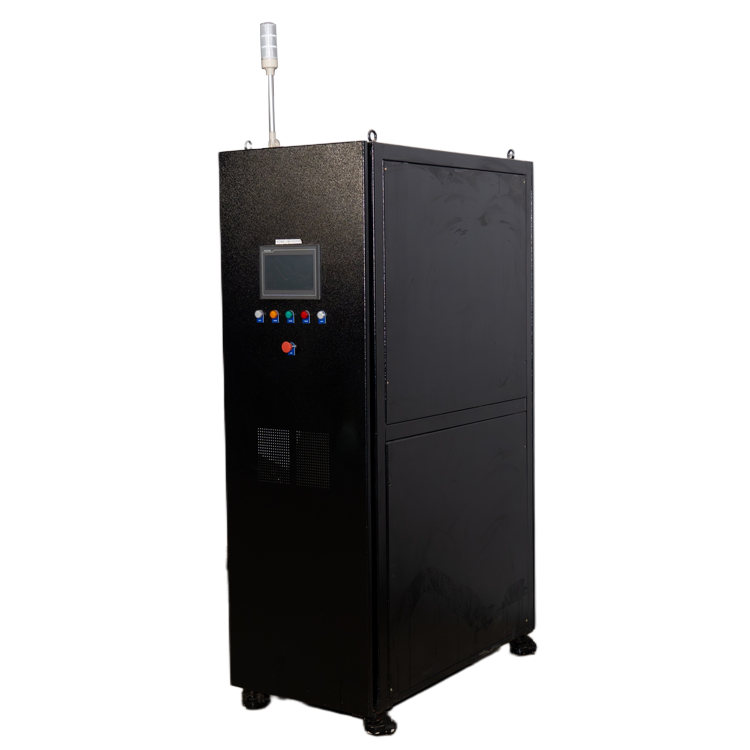
 Cabinet-Type CDUThe cabinet mounted CDU (Coolant Distribution Unit) is an integrated cooling distribution solution housed within a standalone cabinet. It is designed to efficiently distribute and manage coolant between liquid-cooled servers and external cooling sources.
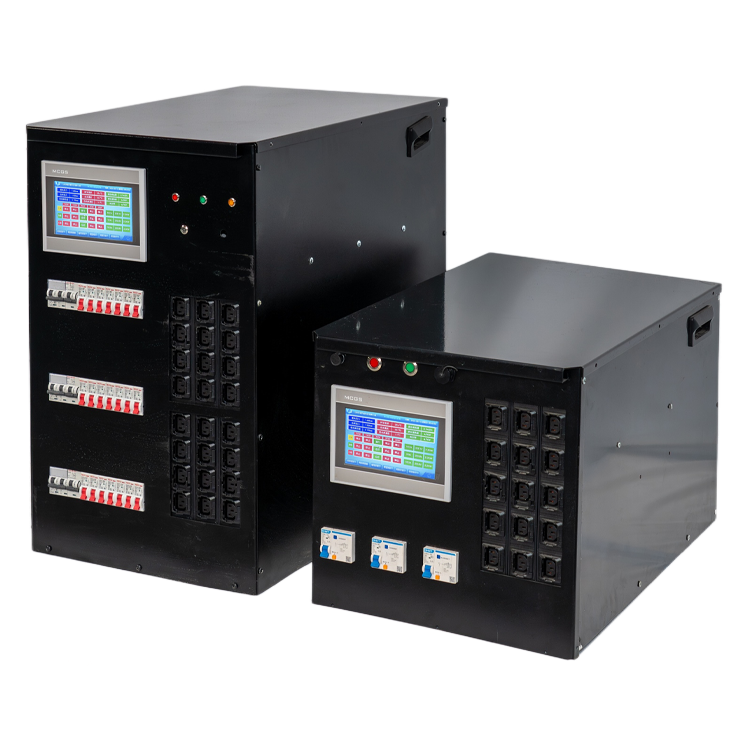
 Liquid-Cooled Dummy LoadLiquid-cooled dummy load is a specialized device used for testing electrical equipment, primarily in scenarios such as data centers, power plants, and UPS systems to simulate electrical loads.
Leave A Message
If you are interested in our products and want to know more details, please leave a message here, we will reply you as soon as we can.