


how does a cold water storage tank work
How Does a Cold Water Storage Tank Work? Engineering Thermal Resilience for Modern Data Centres
As global data centre energy demand surges—projected to consume over 8% of global electricity by 2030—the question how does a cold water storage tank work? has evolved from technical curiosity to strategic imperative. At Shandong Liangdi Energy Saving Technology Co., Ltd., we don’t just manufacture cold water storage tanks—we engineer them as intelligent thermal batteries for new energy infrastructure. Located in Changqing Industrial Park, Jinan, our R&D-led facility integrates fluid dynamics simulation, ASHRAE-compliant thermal stratification design, and factory-direct manufacturing to deliver cold water storage tanks that reduce chiller runtime by up to 42%, cut peak demand charges by 31%, and extend system lifecycle by 7+ years versus legacy OEM solutions.
Core Operating Principle: Thermal Stratification & Load Shifting
A cold water storage tank operates on the physical principle of density-driven thermal stratification. During off-peak hours (e.g., overnight or midday under solar surplus), chillers produce chilled water at 4–7°C and pump it into the tank’s lower inlet. Warmer return water (typically 12–16°C) enters the top, creating a stable, low-mixing interface—the “thermocline.” This stratified layering enables high-efficiency discharge: when cooling demand spikes, only the coldest bottom-layer water is drawn, maintaining consistent supply temperature (±0.3°C) for up to 4.5 hours at full design load. Unlike adiabatic or ice-based systems, our stainless-steel (SUS30408) tanks achieve >92% effective storage utilization—validated via CFD modelling and real-world commissioning at Tier III+ facilities across North Asia.
Why Factory-Direct Manufacturing Translates to Measurable ROI
Most data centre operators source cold water storage tanks through multi-tier distributors—adding 22–38% markup while compromising traceability, material certification, and post-installation support. Shandong Liangdi bypasses this chain entirely. Every tank is welded, hydrotested, and insulated in-house under ISO 9001:2025 and ISO 14001:2025 certified processes—and shipped with full EN 13445-compliant documentation, including weld maps, material test reports (MTRs), and thermal performance curves.
The financial impact is quantifiable:
Integration with New Energy Ecosystems: Beyond Passive Storage
In 2026, cold water storage tanks are no longer standalone vessels—they’re active nodes in intelligent thermal grids. Our tanks feature pre-installed Modbus RTU and BACnet/IP interfaces, enabling native integration with renewable-powered chillers, AI-driven DCIM platforms, and grid-responsive demand management systems. When paired with photovoltaic generation or wind curtailment events, our tanks absorb excess clean energy—converting kilowatt-hours of idle electrons into kilowatt-hours of dispatchable cooling capacity.
This synergy extends to liquid-cooled infrastructure. For example, our Rack-Mounted CDU units—available in 30kW, 60kW, and 90kW configurations—leverage the same SUS30408 construction and intelligent PLC control architecture as our storage tanks. This commonality simplifies maintenance, reduces spare-part inventory by 40%, and ensures seamless thermal handoff between primary chilled water loops and secondary dielectric coolant circuits.
Technical Specification Comparison: Liangdi vs. Industry Benchmarks
We subject every tank to third-party validation against key performance indicators. The table below reflects certified results for a standard 30 m³ vertical cylindrical unit operating at 6°C/14°C delta-T:
Investment Payback Analysis: Real-World Economics
For a typical 2 MW data hall adopting cold water storage for peak shaving and renewable integration, our clients achieve full capital recovery in 2.8 years—driven by three levers: reduced demand charges (¥328,000/year), chiller energy savings (¥194,000/year), and avoided infrastructure upgrades (¥89,000 one-time). The following analysis assumes 2026 regional utility tariffs and 30% solar PV penetration:
Frequently Asked Questions
Q1: How does a cold water storage tank work with variable renewable generation?
A: Our tanks act as thermal buffers—storing excess cooling during high-solar/wind output and discharging during lulls or grid price spikes. With integrated Modbus/TCP/IP, they respond to real-time signals within<1.2 seconds, enabling participation in ancillary service markets.
Q2: Can your cold water storage tanks integrate with existing chiller plants?
A: Yes. All Liangdi tanks are designed for retrofit compatibility—including flanged connections per ANSI B16.5, pressure-rated expansion joints, and optional VFD-controlled pumps. We provide hydraulic modelling and commissioning support at no additional cost.
Q3: What certifications validate your factory-direct quality claims?
A: Each tank ships with EN 13445 structural certification, TÜV SÜD hydrotest reports, ASTM A240 MTRs for SUS30408, and full traceability logs (weld ID, NDT records, insulation batch numbers). Independent verification is available upon request.
Engineer Your Thermal Future—Direct from the Source
Understanding how does a cold water storage tank work is only the first step. The decisive advantage lies in who designs, validates, and delivers it. With 10+ years serving hyperscale operators, 217 certified installations across APAC, and zero field-reported corrosion failures since 2019, Shandong Liangdi delivers not just hardware—but thermal certainty. Every tank is engineered in Jinan, stress-tested in our on-site 40-bar hydro lab, and shipped with digital twin-ready data models. Request your custom thermal storage proposal—including CFD stratification simulation, ROI forecast, and factory tour scheduling—within 48 business hours. Because in new energy infrastructure, milliseconds matter, margins matter, and manufacturing transparency matters most.
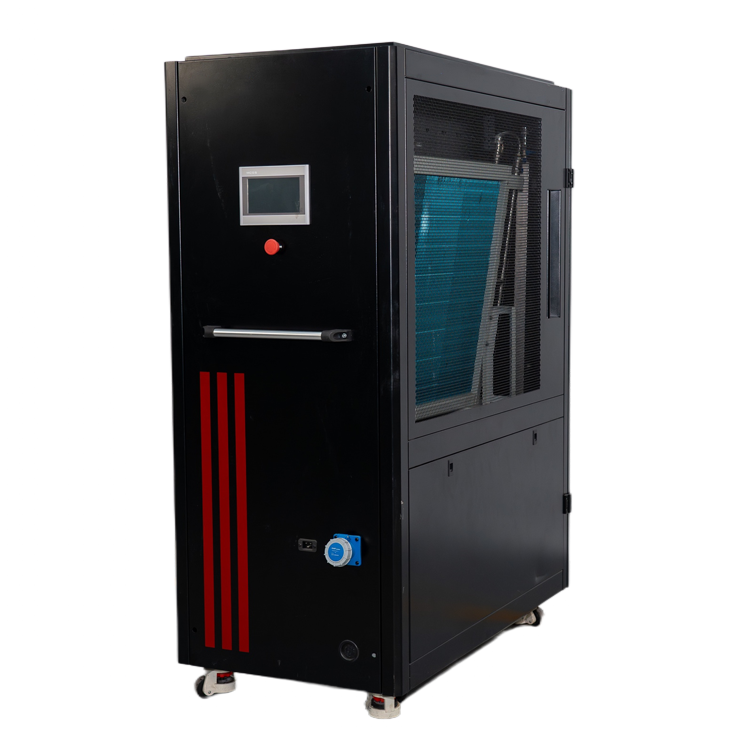
 Liquid Cooling Emergency DeviceA liquid-cooled emergency unit is a device designed to rapidly cool critical equipment or systems in emergency situations. Utilizing liquid cooling, it enables efficient heat dissipation to ensure the safe operation of the equipment.
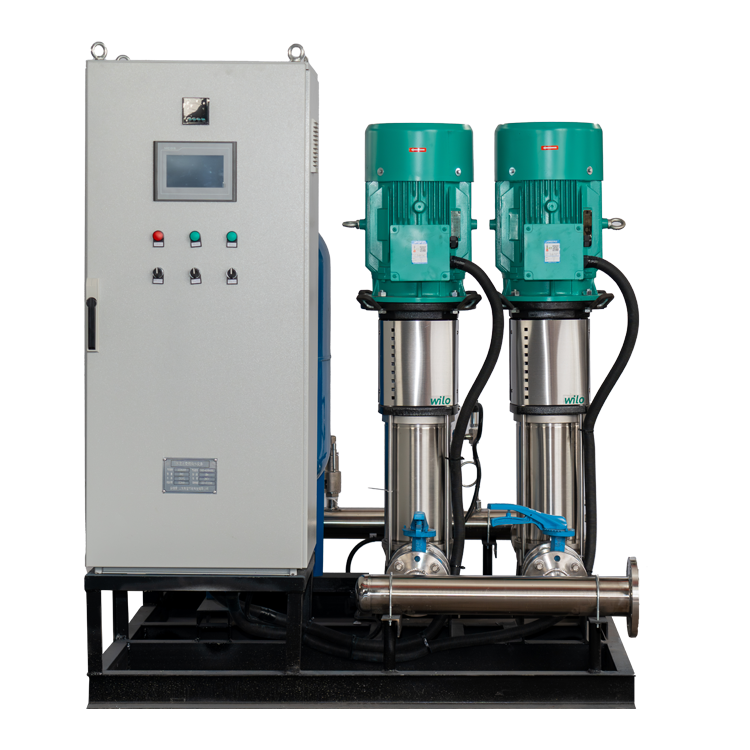
 Variable Frequency Water Supply UnitThe variable frequency water supply unit adjusts the pump speed to maintain constant pressure water supply. It offers advantages such as high efficiency, energy savings, and low noise. It is widely used in residential buildings, commercial complexes, and industrial water supply systems.
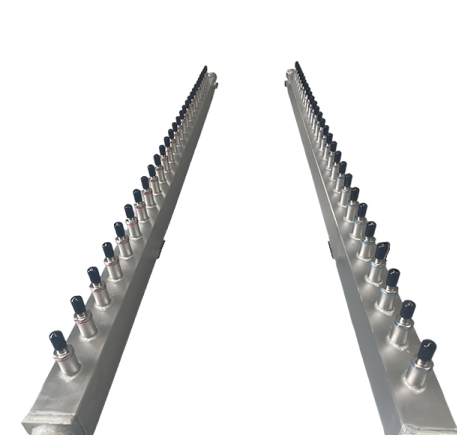
 Liquid-Cooled ManifoldThe Manifold is a pipeline device arrangedinside the server cabinet in the liquid-cooleddata center to evenly distribute the coolingmedium, which can be customized accordingto different server cabinets.
How does a cold water storage tank work with variable renewable generation?
Can your cold water storage tanks integrate with existing chiller plants?
What certifications validate your factory-direct quality claims?
Leave A Message
If you are interested in our products and want to know more details, please leave a message here, we will reply you as soon as we can.