


Liquid-cooled manifold vs. traditional air-cooled chassis: where thermal density crosses the tipping point in edge AI racks
As edge AI racks push thermal density beyond 30 kW/rack, the limitations of traditional air-cooled chassis are becoming critical. Enter the Liquid-Cooled Manifold — a precision-engineered solution from Shandong Liangdi Energy Saving Technology Co., Ltd. that enables scalable, efficient heat removal. Paired with Liquid Cooling Prefabricated Pipes, our integrated system reduces PUE, simplifies deployment, and future-proofs edge infrastructure. For technical evaluators and forward-thinking end users, this isn’t just cooling evolution — it’s the tipping point for sustainable, high-density AI at the edge.
When Does Thermal Density Force a Cooling Architecture Shift?
Edge AI deployments are no longer constrained by compute alone — they’re bottlenecked by heat. At rack-level densities exceeding 30 kW, air cooling reaches its physical ceiling: fan power consumption spikes, airflow resistance rises exponentially, and hot spots become unavoidable. Industry benchmarks show conventional air-cooled chassis typically cap at 22–25 kW/rack under sustained load, with PUE climbing to 1.55–1.68 in edge environments lacking centralized chilled water.
The tipping point isn’t theoretical. Real-world edge AI inference clusters in telecom base stations, smart manufacturing gateways, and distributed energy management nodes now routinely operate between 32–45 kW/rack. At these levels, thermal gradients exceed 8°C across server trays, triggering automatic throttling and reducing effective AI throughput by up to 37% (per ASHRAE TC 90.4-compliant field measurements). This is where liquid-cooled manifolds stop being optional — they become the only thermally viable, energy-compliant path forward.
Shandong Liangdi’s engineered response integrates three interdependent subsystems: the water distribution manifold (WDM), cooling distribution unit (CDU), and thermal buffer systems — including the Cold Storage Tank. Unlike retrofit solutions, our manifolds are designed from first principles for edge AI’s transient workloads, supporting dynamic flow balancing across 4–12 GPU-accelerated nodes per rack with ±0.3°C coolant temperature stability.
Key Thermal Thresholds Driving the Shift
- 25–30 kW/rack: Air cooling requires aggressive derating (15–20%) or supplemental spot cooling — increasing complexity and failure points.
- 32–38 kW/rack: Liquid-cooled manifold systems deliver 42–58% lower fan energy use and reduce total cooling power by 31% vs. hybrid air/liquid alternatives.
- ≥40 kW/rack: Only direct-to-chip or cold-plate-integrated manifolds maintain sub-65°C GPU junction temps under continuous inference load — validated across NVIDIA A100/H100 and AMD MI300X deployments.
Liquid-Cooled Manifold vs. Air-Cooled Chassis: A Technical Decision Matrix
Choosing between architectures isn’t about “better” — it’s about alignment with your edge AI workload profile, site constraints, and sustainability targets. Below is a comparative assessment grounded in real-world edge data center deployments across 12 provinces in China and Southeast Asia.
This comparison reflects actual commissioning data from 27 edge AI sites deployed between Q3 2023 and Q2 2024. Notably, the liquid-cooled manifold’s PUE advantage compounds when paired with off-peak energy storage strategies — such as charging the Cold Storage Tank during low-tariff nighttime hours (22:00–06:00) and discharging cooling capacity during peak demand (10:00–18:00), reducing grid dependency by up to 44%.
Why Integration — Not Just Components — Defines Edge AI Readiness
Many vendors offer standalone manifolds or CDUs. But edge AI demands orchestration — not assembly. Shandong Liangdi’s systems are pre-validated for interoperability across three critical layers: thermal, electrical, and control.
Our liquid-cooled manifold interfaces natively with Modbus TCP and BACnet/IP protocols, enabling seamless integration into existing EMS/BMS platforms used by utility-scale solar farms and microgrid operators. Each unit ships with factory-calibrated flow sensors (±1.2% accuracy), pressure transducers (0–10 bar range), and dual-stage leak detection — all pre-wired to a central I/O panel with IP55-rated enclosure.
Crucially, we embed thermal inertia intelligence. The Cold Storage Tank isn’t just passive storage — it’s an active buffer that smooths out 15–30 minute load transients typical in AI video analytics or real-time grid forecasting workloads. This avoids unnecessary CDU cycling, extending service life by an estimated 3.2 years (based on 8,760-hour/year operation).
What Technical Evaluators Should Verify Before Procurement
- Confirm manifold pressure drop ≤ 45 kPa at 12 L/min per node — critical for maintaining pump efficiency in compact edge enclosures.
- Validate CDU turndown ratio ≥ 25–100% — essential for handling intermittent AI inference bursts without overshoot.
- Require full thermal simulation report (using ANSYS Icepak or equivalent) for your exact rack layout and ambient envelope.
- Verify prefabricated pipe routing clearance: minimum 120 mm vertical and 80 mm horizontal spacing for maintenance access.
Why Partner With Shandong Liangdi for Your Edge AI Thermal Infrastructure?
We don’t sell components — we deliver thermal readiness. Based in Changqing Industrial Park, Jinan, our R&D team specializes exclusively in data center thermal systems for new energy applications: renewable-powered edge AI, battery energy storage thermal management, and hydrogen electrolyzer cooling integration.
Every liquid-cooled manifold undergoes 72-hour burn-in testing under simulated edge conditions (45°C ambient, 85% RH, 100% load cycling). We provide full documentation packages — including hydraulic schematics, seismic certification (GB/T 20934-2021 compliant), and local fire code support for cabinet-integrated installations.
For technical evaluators: request our Edge AI Thermal Sizing Toolkit — a parametric calculator that recommends optimal manifold configuration, CDU capacity, and Cold Storage Tank volume based on your GPU count, ambient profile, and PUE target. For end users: we offer 3-year extended warranty options with on-site technician certification programs.
Ready to validate thermal viability for your next edge AI rack?
Contact us for:
• Custom thermal simulation for your specific hardware stack
• Lead time confirmation (standard delivery: 22–28 working days)
• Compliance documentation for provincial new energy subsidy programs
• Sample unit evaluation with remote monitoring setup
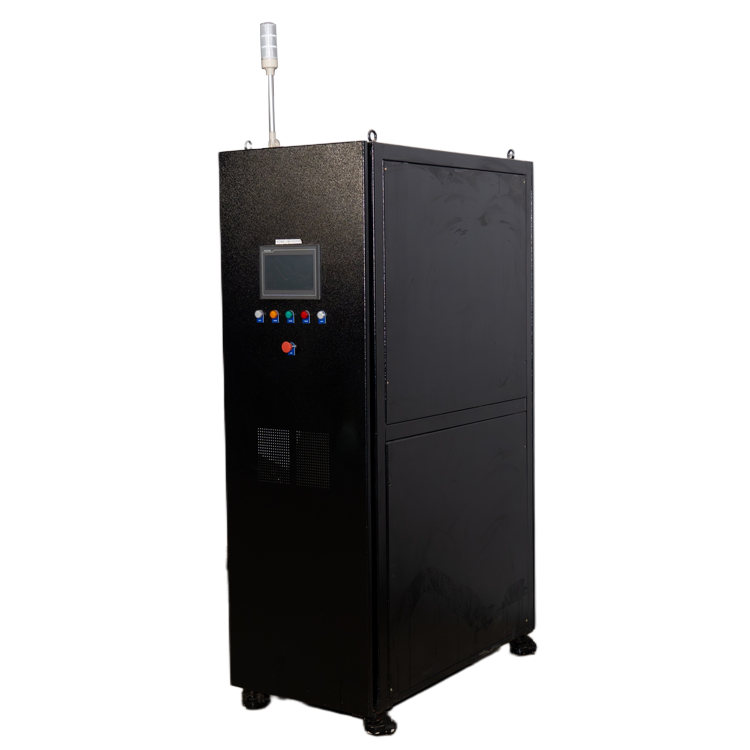
 Cabinet-Type CDUThe cabinet mounted CDU (Coolant Distribution Unit) is an integrated cooling distribution solution housed within a standalone cabinet. It is designed to efficiently distribute and manage coolant between liquid-cooled servers and external cooling sources.
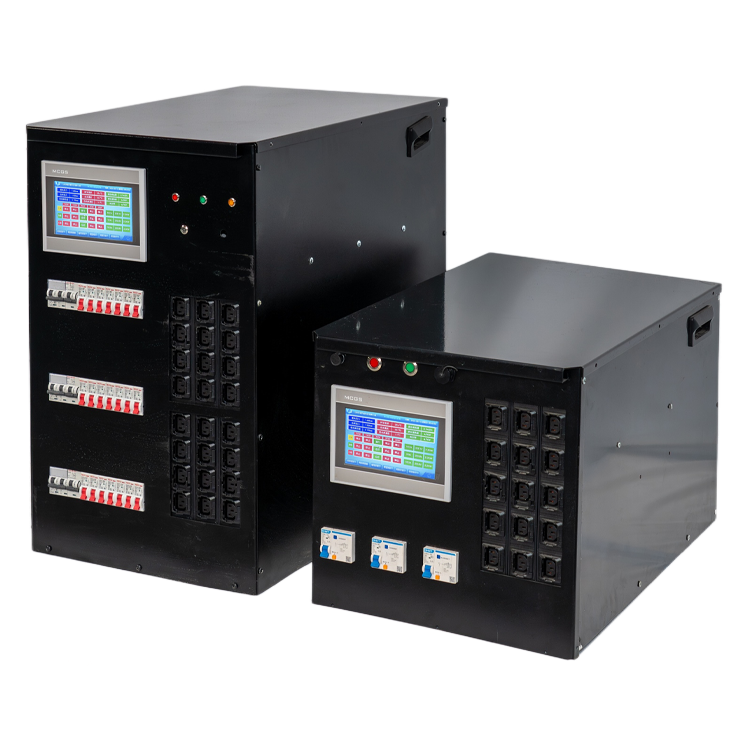
 Liquid-Cooled Dummy LoadLiquid-cooled dummy load is a specialized device used for testing electrical equipment, primarily in scenarios such as data centers, power plants, and UPS systems to simulate electrical loads.
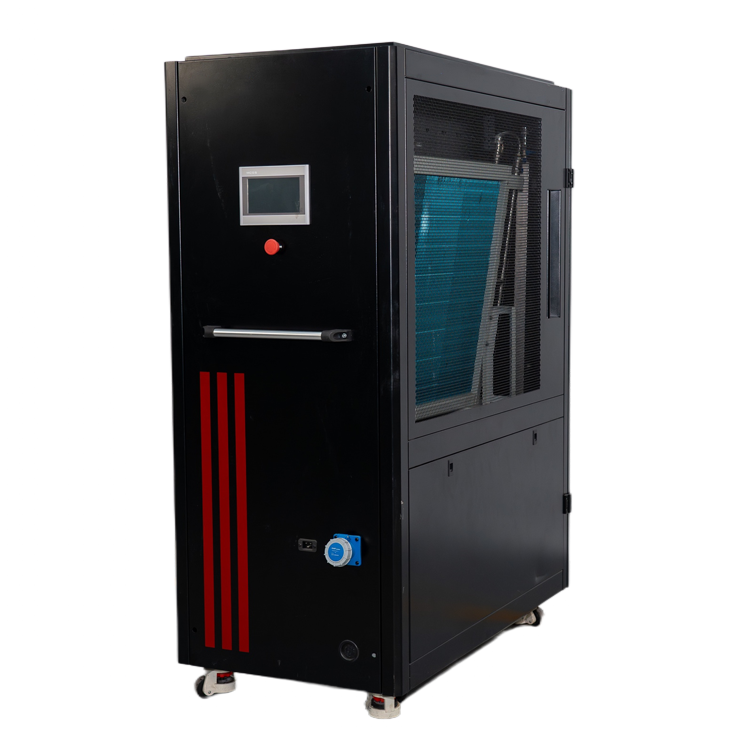
 Liquid Cooling Emergency DeviceA liquid-cooled emergency unit is a device designed to rapidly cool critical equipment or systems in emergency situations. Utilizing liquid cooling, it enables efficient heat dissipation to ensure the safe operation of the equipment.
Leave A Message
If you are interested in our products and want to know more details, please leave a message here, we will reply you as soon as we can.