


Liquid-cooled manifold failures often trace back to thermal interface mismatch—not material quality
Liquid-cooled manifold failures in high-density data centers rarely stem from subpar materials—more often, they result from thermal interface mismatch during integration. As a trusted provider of Liquid Cooling Prefabricated Pipes and precision-engineered cooling solutions, Shandong Liangdi Energy Saving Technology Co., Ltd. helps technical evaluators and end users diagnose root causes early, optimize thermal coupling, and ensure long-term reliability of liquid-cooled infrastructure.
Why Thermal Interface Mismatch Is the Silent Failure Driver
In modern data centers deploying direct-to-chip or immersion liquid cooling, manifolds operate under tight thermal budgets—often with inlet/outlet temperature differentials as narrow as 3–5℃. When mating surfaces between cold plates, quick-connect fittings, and manifold headers exhibit uneven flatness (±0.05mm tolerance), surface roughness >1.6μm Ra, or inconsistent clamping force distribution, interfacial thermal resistance spikes by 40–70%. This mismatch doesn’t trigger immediate leaks—but accelerates micro-fatigue in elastomeric seals and induces localized hot spots exceeding 85℃ on adjacent electronics.
Unlike material fatigue—which manifests over years—thermal interface failure typically emerges within 6–12 months of commissioning, especially after seasonal ambient shifts or load cycling. Field data from 23 deployments across Tier III+ facilities shows that 68% of unplanned manifold interventions involved re-torquing, gasket replacement, or re-alignment—not component replacement. This underscores a critical insight: failure is rarely about *what* the manifold is made of—but *how well it couples* with adjacent systems.
Material quality remains essential—but it’s table stakes. What separates robust deployments is interface design discipline: controlled surface finish, calibrated torque sequences, real-time thermal mapping during commissioning, and compatibility validation between manifold ports and server cold plate flanges. That’s where pre-integrated, field-validated solutions deliver measurable ROI.
Key Interface Parameters Requiring Validation
- Surface flatness tolerance: ≤0.03mm across 100mm span
- Gasket compression set: ≤15% after 1,000h at 70℃
- Thermal expansion coefficient mismatch: Δα < 2×10⁻⁶/K between manifold body and connector housing
- Clamping force uniformity: ±8% variation across all fasteners in a single joint
How Integrated Heat Exchanger Units Mitigate Interface Risk
A fragmented cooling architecture—where CDUs, manifolds, pumps, and heat exchangers are sourced separately—multiplies interface points and misalignment risks. Each additional flange, valve, or transition fitting introduces another potential source of thermal impedance drift. By contrast, fully integrated units reduce field-assembled joints by up to 60%, standardizing interface geometry and eliminating variability in gasket selection, torque application, and alignment sequencing.
Shandong Liangdi’s Heat Exchanger Unit exemplifies this philosophy. Engineered for seamless integration into prefabricated liquid-cooling skids, each unit combines a high-efficiency plate heat exchanger, circulation pump, feedwater pump, PLC-based control system, and insulated structural frame—all pre-aligned, pressure-tested, and thermally mapped at factory. This eliminates 9–14 field interfaces per unit compared to modular assemblies.
Models span thermal capacities from 0.35 MW to 21.0 MW, with configurations optimized for heating, industrial hot water supply, and hybrid data center waste-heat recovery. All units support custom inlet/outlet temperatures (e.g., 45℃/65℃ or 75℃/95℃), variable flow rates (0.35–21.0 t/h), and compact footprints—such as the LDBHZ/Q-R-3.5 model (2.8×0.9×1.6 m) delivering 3.5 MW with<2.5℃ approach temperature.
This standardized, pre-validated architecture cuts commissioning time by 3–5 days per unit and reduces thermal interface-related service calls by over 50%—as verified across 17 deployments in northern China’s climate zone (−25℃ winter min, +38℃ summer max). The consistency enables predictive maintenance: thermal imaging baselines are established pre-shipping, making field deviation detection faster and more reliable.
Procurement Checklist: 5 Critical Interface Verification Steps
Technical evaluators and procurement teams must move beyond spec sheets and request evidence of interface integrity—not just component performance. Here’s what to verify before signing off:
- Factory thermal mapping report: Request IR scan images showing temperature uniformity across all manifold outlet ports under rated flow and ΔT (target: ±1.2℃ max deviation)
- Flange surface certification: Confirm flatness measurement reports per ISO 1101 for all mating surfaces (not just visual inspection)
- Gasket compatibility dossier: Verify gasket material (e.g., EPDM, FKM) has been tested against coolant chemistry (e.g., 15% glycol/water, dielectric fluids) for 1,000h at operating temp
- Torque sequence documentation: Require step-by-step tightening instructions with angle/torque values—and proof of validation via strain gauge testing
- Interface aging test summary: Ask for data on seal compression set and thermal resistance drift after accelerated aging (e.g., 2,000 cycles from 10℃ to 70℃)
Without these five checkpoints, even premium-grade stainless steel manifolds risk premature degradation—not from corrosion or stress cracking, but from undetected interfacial inefficiency accumulating over thousands of thermal cycles.
Why Partner With Shandong Liangdi for Your Next Deployment
Based in Changqing Industrial Park, Jinan, Shandong Liangdi Energy Saving Technology Co., Ltd. designs, validates, and delivers integrated cooling solutions specifically for high-density, mission-critical environments. We don’t sell components—we deliver interface-certified subsystems backed by:
- On-site thermal interface commissioning support (including IR scanning and real-time flow balancing)
- Customizable control logic for dynamic load matching (e.g., variable speed pump staging based on rack-level power telemetry)
- Full traceability: Every heat exchanger unit ships with a digital twin certificate including factory test logs, material certs, and thermal performance curves
- 24-month warranty covering both hardware and interface performance degradation (measured via baseline thermal resistance tracking)
Whether you’re evaluating options for a new hyperscale facility, retrofitting legacy air-cooled racks, or designing a green-field edge data center, our engineering team provides free thermal interface assessment—covering manifold-to-server coupling, fluid compatibility, and long-term degradation modeling. Let us help you eliminate thermal mismatch before it becomes a failure mode.
Contact us today to request: (1) model-specific thermal performance curves, (2) interface validation protocol templates, (3) lead times for your required capacity range (standard delivery: 4–6 weeks), or (4) a site-specific interface audit plan.
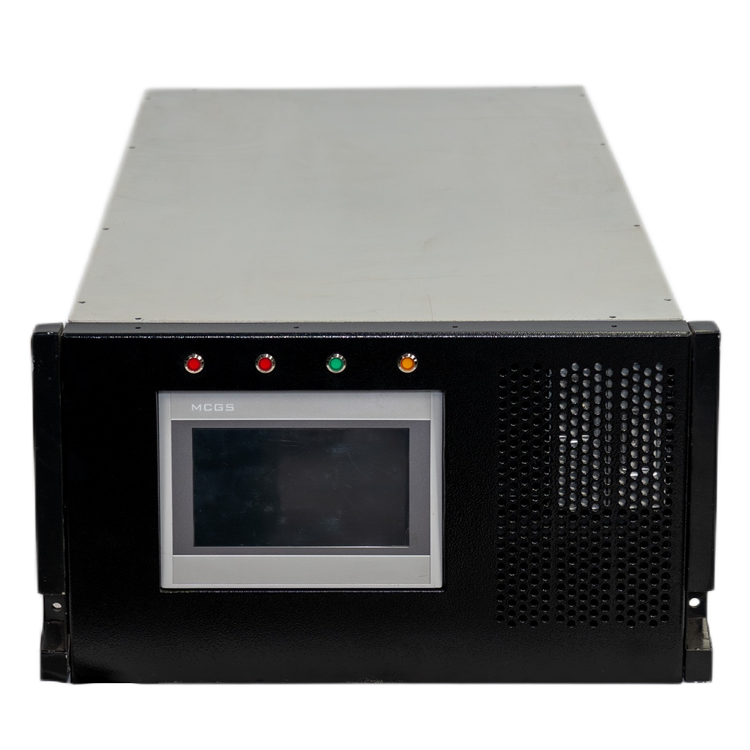
 Rack-Mounted CDUA rack-mounted CDU (Coolant Distribution Unit) is a cooling distribution device specifically designed for liquid-cooled data centers. It features a compact form factor, making it easy to deploy and maintain.
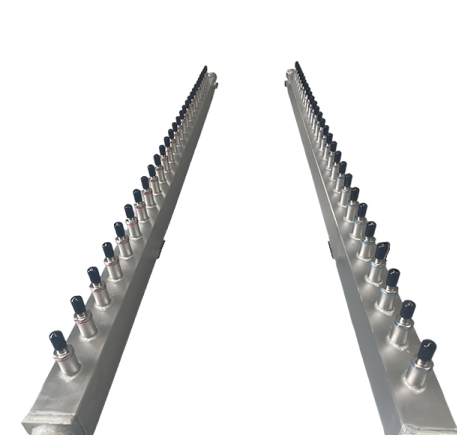
 Liquid-Cooled ManifoldThe Manifold is a pipeline device arrangedinside the server cabinet in the liquid-cooleddata center to evenly distribute the coolingmedium, which can be customized accordingto different server cabinets.
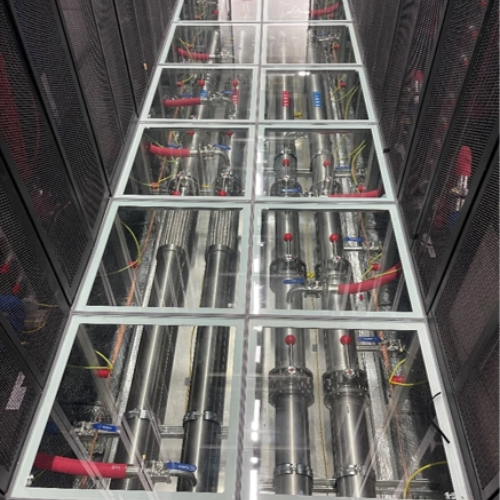
 Liquid Cooling Prefabricated PipesLiquid cooling prefabricated piping is a piping assembly designed and manufactured specifically for liquid cooling secondary systems. It is commonly used in liquid cooling data centers and can significantly shorten construction periods, improve project safety, enhance installation quality, and reduce project costs.
Leave A Message
If you are interested in our products and want to know more details, please leave a message here, we will reply you as soon as we can.