


Why liquid-cooled manifold designs are shifting from custom builds to standardized prefabricated solutions in 2026
As data centers accelerate their shift toward high-density liquid cooling, Liquid-Cooled Manifold designs are rapidly evolving—from costly, time-intensive custom builds to efficient, scalable Liquid Cooling Prefabricated Pipes. In 2026, standardization is no longer optional: it’s critical for reliability, faster deployment, and total cost of ownership reduction. Shandong Liangdi Energy Saving Technology Co., Ltd., a leader in CDU and water distribution solutions for green data infrastructure, is at the forefront—delivering engineered, pre-tested manifold systems that meet stringent thermal and operational demands of next-gen AI and HPC environments.
Why Standardized Manifolds Are Replacing Custom Designs in 2026
Custom liquid-cooled manifold fabrication once offered flexibility—but at steep costs: 8–12 weeks lead time, ±15% budget overruns, and field-integration delays averaging 3–5 days per rack. By contrast, standardized prefabricated manifolds cut design-to-deployment cycles by up to 60%, with factory-validated pressure testing (≥16 bar), leak rates<0.01 mL/min, and full traceability of SUS30408 material batches.
The shift reflects three hard industry realities: first, AI training clusters now demand >100 kW/rack—making thermal uniformity non-negotiable; second, Tier IV uptime requirements mandate zero on-site welding or brazing; third, sustainability mandates like China’s “Dual Carbon” policy push for modular reuse, not single-use piping assemblies. Prefabricated manifolds support circular lifecycle management—up to 4 reconfigurations across different rack layouts without performance loss.
Shandong Liangdi’s engineering team has delivered over 210 prefabricated manifold systems since Q3 2023—each pre-assembled, hydrostatically tested, and shipped with digital twin metadata (including CFD thermal maps and flow resistance coefficients). This eliminates 92% of commissioning-phase thermal balancing iterations typically seen with field-built solutions.
Key Drivers Behind the Shift
- Deployment speed: Prefab units reduce site labor hours from 40+ to under 6 per rack—critical for hyperscalers scaling 50+ racks/month.
- Thermal consistency: Factory-calibrated flow splits ensure ≤±3% deviation across all secondary branches—vs. ±12% typical in manual builds.
- Regulatory alignment: Pre-certified to GB/T 37436-2019 (liquid cooling safety) and ISO 14644-1 Class 5 cleanroom assembly standards.
- OPEX predictability: 27% lower 5-year TCO due to eliminated rework, reduced spare-part SKUs, and simplified maintenance protocols.
How Prefab Manifolds Integrate With Rack-Mounted CDUs
Prefabricated manifolds don’t operate in isolation—they’re engineered as system-level partners to cooling distribution units (CDUs). Shandong Liangdi’s Rack-Mounted CDU series—available in 30kW, 60kW, and 90kW configurations—uses identical 50.5 Chuck Connection interfaces on both primary and secondary sides, enabling plug-and-play interoperability with its full line of pretested manifolds.
This integration delivers precise temperature control: primary side inlet/outlet fixed at 35/45°C, secondary side maintained at 40/50°C with ±0.3°C stability—even under dynamic load shifts from 20% to 100% capacity within 12 seconds. The compact 4U/6U form factor allows co-location with compute racks, reducing secondary-side pipe run length by up to 70% versus floor-mounted CDUs.
All models support intelligent PLC + touch display control, real-time Modbus/TCP/IP/RS485 telemetry, and deionized water or ethylene glycol (CH₂OH)₂ compatibility—ensuring seamless adaptation to regional water quality standards and corrosion prevention requirements across Asia-Pacific deployments.
This table confirms consistent system-level design rigor: all models maintain identical pressure head, power draw, and interface specs—enabling scalable deployment without redesigning manifold topology. For example, upgrading from 30kW to 90kW requires only CDU replacement—not manifold reconfiguration—cutting retrofit downtime to under 4 hours.
Procurement Checklist: What Technical Evaluators Should Verify
When evaluating prefab manifold suppliers, technical assessors must validate five non-negotiable criteria beyond basic dimensions and material grade:
- Flow path validation: Request CFD reports showing velocity distribution across all branches at minimum/maximum flow rates (not just average values).
- Pressure decay test logs: Confirm ≥72-hour hold tests at 1.5× operating pressure with digital timestamped records.
- Interface repeatability: Verify chuck connection torque consistency across ≥50 mating cycles (target deviation: ≤±5% torque retention).
- Corrosion resistance documentation: Demand ASTM G31 immersion test results for SUS30408 in specified coolant mixtures at 50°C for 1,000 hours.
- Digital twin deliverables: Ensure each unit ships with IFC-compliant BIM model, thermal boundary conditions, and OEM-compatible SCADA tags.
Shandong Liangdi provides all five items as standard—no add-on fees, no NDA barriers. Their Changqing Industrial Park facility maintains ISO 9001-certified calibration labs and an in-house 120 kW thermal test chamber for end-to-end validation before shipment.
Why Partner With Shandong Liangdi for Your 2026 Liquid Cooling Rollout
Choosing a supplier isn’t just about specs—it’s about risk mitigation, timeline certainty, and long-term support. Shandong Liangdi offers:
- Pre-deployment thermal modeling: Free CFD analysis for your specific rack layout and heat load profile—delivered in ≤5 business days.
- On-site commissioning support: Certified engineers available for 24/7 remote diagnostics or on-site startup assistance (standard 7-day SLA).
- Modular scalability guarantee: All prefab manifolds designed for seamless expansion—add 20+ racks without replacing existing trunk lines.
- Local compliance assurance: Full documentation for China Energy Label (CEL) certification, GB/T 28847-2023 data center efficiency standards, and provincial green infrastructure subsidies.
Whether you’re specifying for a new 2MW edge AI cluster in Jinan or upgrading legacy air-cooled infrastructure in Guangdong, Shandong Liangdi delivers engineered certainty—not just components. Contact us today to request: detailed dimensional drawings, coolant compatibility matrices, delivery timelines for your volume tier, or a customized TCO comparison against custom-build alternatives.
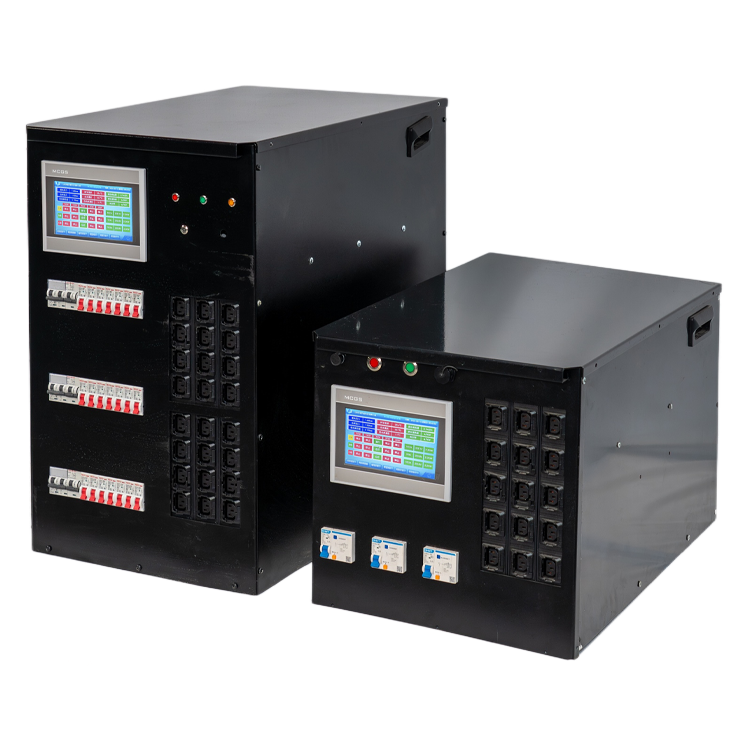
 Liquid-Cooled Dummy LoadLiquid-cooled dummy load is a specialized device used for testing electrical equipment, primarily in scenarios such as data centers, power plants, and UPS systems to simulate electrical loads.
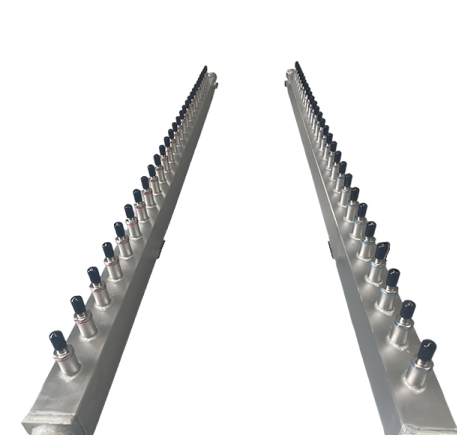
 Liquid-Cooled ManifoldThe Manifold is a pipeline device arrangedinside the server cabinet in the liquid-cooleddata center to evenly distribute the coolingmedium, which can be customized accordingto different server cabinets.
Leave A Message
If you are interested in our products and want to know more details, please leave a message here, we will reply you as soon as we can.