


How to Compare Heat Exchanger Types by Efficiency and Footprint
Comparing heat exchanger types by efficiency and footprint is no longer a narrow equipment exercise. In new energy facilities and data centre infrastructure, thermal design affects energy use, rack density, expansion planning, and operating stability.
A compact unit may save floor space but create higher pressure drop. A highly efficient design may reduce pumping energy yet demand stricter water quality. The practical decision comes from reading both thermal performance and installation reality together.
This matters even more in liquid cooling systems, where CDUs, manifolds, storage tanks, and heat exchanger units work as one chain. Companies such as Shandong Liangdi Energy Saving Technology Co., Ltd. operate in this exact context, serving data-centre cooling and water distribution applications that depend on reliable heat transfer.
What the comparison is really about
Most heat exchanger types move heat between two fluids without mixing them. The challenge is not only whether heat can be transferred, but how much space, pumping power, maintenance effort, and future flexibility are required.
For technical evaluation, efficiency usually means more than thermal effectiveness alone. It also includes approach temperature, pressure loss, fouling behaviour, and how stable performance remains during partial load operation.
Footprint is equally broader than physical dimensions. It includes service clearance, piping arrangement, lifting access, connection orientation, and whether the unit can fit into a crowded equipment room or prefabricated module.
Common heat exchanger types in energy and cooling systems
Different heat exchanger types suit different thermal loads and site constraints. The table below gives a practical comparison for liquid cooling, renewable power support systems, and utility water loops.
In data-centre liquid cooling and battery energy support systems, plate-based heat exchanger types often win on compactness. Shell-and-tube units remain useful where fluid quality varies or mechanical robustness matters more than space.
Efficiency should be measured under real operating conditions
Nameplate performance rarely tells the full story. Heat exchanger types should be compared at the actual inlet temperatures, flow ranges, pressure limits, and water chemistry expected in service.
A design that performs well at peak load may be less attractive during long partial-load hours. This is important in renewable-integrated systems, where thermal demand can move with outdoor conditions, IT load, or power conversion cycles.
Key performance checks
- Approach temperature at design and reduced load.
- Pressure drop on both primary and secondary loops.
- Tolerance to fouling, scaling, or suspended particles.
- Response speed during load swings.
- Maintenance intervals and cleaning method.
When heat recovery is part of the project, thermal effectiveness should also be tied to reuse value. A small temperature gain may still be commercially meaningful if it supports process water preheating or auxiliary energy recovery.
Footprint is often a system-level constraint
Compactness matters because many new energy projects are no longer built with generous mechanical rooms. Skid integration, containerised energy systems, and high-density data halls all push designers toward smaller, cleaner layouts.
That is why the best choice among heat exchanger types may depend on piping simplicity as much as core heat transfer area. Fewer elbows, shorter runs, and easier valve placement can improve the total installation result.
This same logic appears in adjacent testing equipment. For example, Liquid-Cooled Dummy Load solutions used in data centers, power plants, and UPS systems are valued partly because liquid cooling supports efficient heat dissipation within a compact 400mm × 420mm × 600mm envelope.
In practice, a small footprint becomes more useful when it also supports flexible control. Features such as supply-return differential pressure control, flow-based control, remote monitoring through a 485 interface, and USB data export help thermal testing fit into operational workflows.
Where different designs make sense
In data centres, heat exchanger types are often selected around liquid cooling architecture. CDUs, manifolds, and cold storage tanks require stable heat rejection, low leakage risk, and predictable pressure behaviour.
In power support systems, thermal equipment may need to handle wider temperature fluctuation and stricter protection logic. Resistance to over-temperature events and pressure-bearing stability can matter more than the smallest possible size.
For modular renewable projects, transport and installation also affect choice. Some heat exchanger types are easier to integrate into prefabricated skids, while others are better for permanent utility rooms with more service access.
A practical way to compare options
A useful evaluation starts with the thermal duty, then narrows the shortlist by fluid condition and layout limits. After that, compare whole-life operating cost rather than equipment price alone.
Useful decision filters
- Define the real load profile, not only the maximum load.
- Check whether water quality supports compact plate-based designs.
- Reserve space for cleaning, sensors, valves, and future expansion.
- Estimate pumping energy created by pressure drop.
- Review protection strategy for temperature and pressure excursions.
Where testing is needed before commissioning, a compact liquid-cooled load unit with manual or touch-screen loading can help verify thermal response safely. That makes comparison data more reliable than relying only on vendor curves.
Moving from comparison to selection
The best heat exchanger types are the ones that match duty, water conditions, layout restrictions, and service expectations at the same time. Efficiency and footprint should be judged as connected variables, not separate checkboxes.
A solid next step is to build a comparison sheet using actual inlet temperatures, flow range, allowable pressure drop, maintenance access, and expansion plans. That approach usually reveals which design is technically balanced and operationally credible.
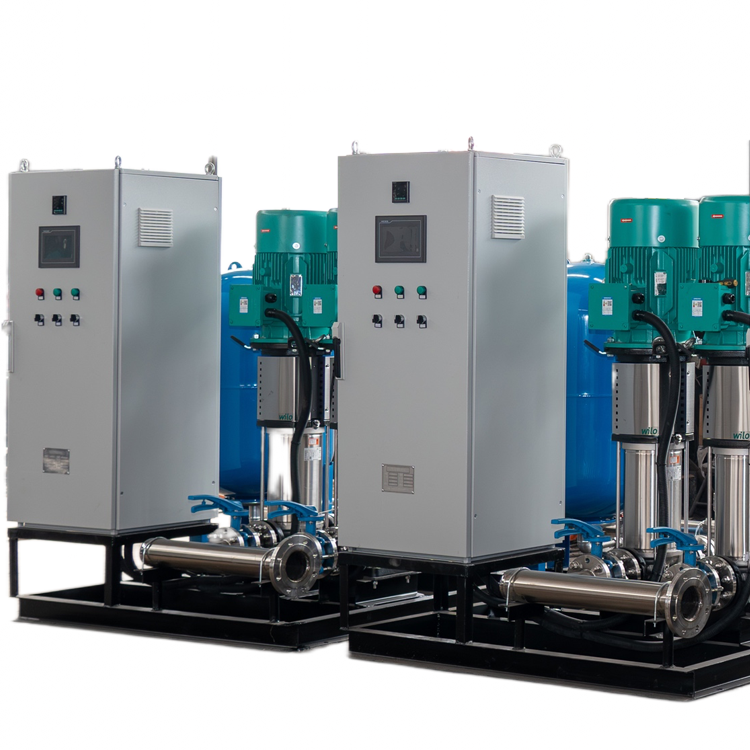
 Water Supply UnitThe variable frequency water supply unitadjusts the pump speed to maintainconstant pressure water supply. lt offersadvantages such as high efficiency, energysavings, and low noise. lt is widely used inresidential buildings, commercialcomplexes, and industrial water supplysystems.
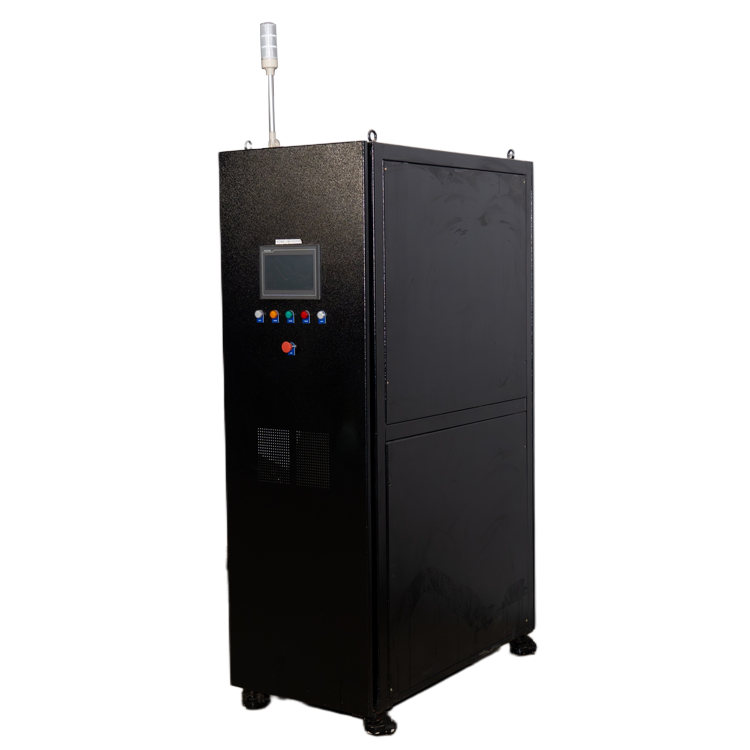
 Cabinet-Type CDUThe cabinet mounted CDU (Coolant Distribution Unit) is an integrated cooling distribution solution housed within a standalone cabinet. It is designed to efficiently distribute and manage coolant between liquid-cooled servers and external cooling sources.
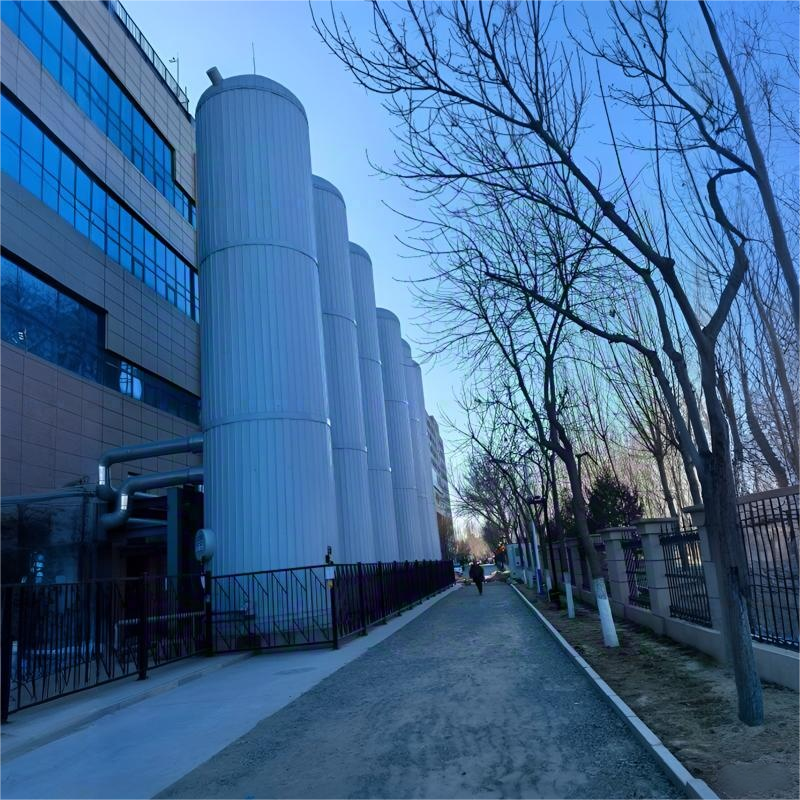
 Cold Storage TankA chilled water storage tank is used to store cooling energy by accumulating it during off-peak electricity hours and releasing it during peak demand to supply air conditioning systems.
Leave A Message
If you are interested in our products and want to know more details, please leave a message here, we will reply you as soon as we can.