


Heat Exchanger Trends in Battery and Hydrogen Projects
Battery storage and hydrogen projects are moving from pilot scale to long-duration, high-density deployment. In that shift, heat exchanger performance is no longer a supporting detail. It directly affects efficiency, safety margins, uptime, and lifecycle cost.
For new energy assets, thermal management now shapes technical bankability as much as capacity or output. A well-matched heat exchanger helps stabilize temperatures, protect sensitive components, and reduce operating risk across variable load conditions.
Why thermal control is under closer review
Battery systems generate uneven heat during charging, discharging, and peak cycling. Hydrogen projects face similar pressure in compression, storage, electrolysis, and auxiliary cooling loops. In both cases, thermal instability can shorten service life and increase failure exposure.
That is why heat exchanger selection now sits closer to project due diligence. It influences energy efficiency, maintenance planning, footprint, water management, and the quality of system integration.
The trend is especially clear in projects expected to run continuously or under fast cycling. Temperature control must remain precise even when ambient conditions, load profiles, and operating schedules change quickly.
What a heat exchanger means in these projects
In practical terms, a heat exchanger transfers heat from one medium to another without mixing them. That sounds simple, but the project value depends on how effectively it handles pressure, temperature range, flow stability, fouling risk, and response speed.
For battery energy storage, the heat exchanger often supports liquid cooling circuits, thermal balancing, and equipment protection. In hydrogen facilities, it may serve electrolyzers, compressors, storage equipment, or broader process cooling packages.
The current market is not only asking whether a unit can cool. It is asking whether the heat exchanger can maintain reliable thermal performance over years of fluctuating operating demand.
Key trends shaping purchasing and project decisions
Higher precision in liquid cooling
Air cooling still has a place, but liquid-based systems are gaining preference where heat density rises. A liquid-cooled heat exchanger usually offers better thermal consistency, faster response, and improved use of compact equipment layouts.
Integration with distribution systems
Standalone equipment creates hidden complexity. More projects now evaluate the heat exchanger together with CDU design, manifolds, pumps, storage tanks, and water supply units to improve overall control and serviceability.
Stronger focus on emergency response
Normal operation is only one part of risk management. In abnormal temperature events, projects increasingly value backup thermal solutions such as Liquid Cooling Emergency Device, which can rapidly cool critical equipment or systems and help preserve safe operation.
Lifecycle efficiency over simple capital cost
Lower purchase price does not guarantee lower project cost. A better heat exchanger may reduce energy loss, service interruptions, cleaning frequency, and component degradation, which matters more over long asset life.
Where these trends matter most
Different new energy applications place different demands on heat transfer equipment. The decision should reflect operating conditions rather than rely on a generic specification.
This is where system experience matters. Shandong Liangdi Energy Saving Technology Co., Ltd. has built its business around cooling distribution units, water distribution manifolds, cold storage tanks, heat exchanger units, and related water supply products. That background reflects an approach centered on integration rather than isolated hardware selection.
How to assess practical value
A useful review goes beyond nominal capacity. The better question is how the heat exchanger performs inside the full thermal loop, including controls, circulation, redundancy, and maintenance conditions.
- Check temperature stability under partial and peak loads.
- Review compatibility with liquid cooling architecture and manifolds.
- Compare cleaning needs, fouling resistance, and service intervals.
- Examine emergency cooling strategy, not only steady-state operation.
- Estimate energy penalty across the full operating year.
In many cases, the best-performing option is the one that reduces system uncertainty. That includes fewer thermal excursions, smoother commissioning, and easier expansion when project capacity grows.
Points that deserve closer attention
Several details tend to affect real project outcomes more than brochure data suggests. Material selection, sealing reliability, flow distribution, and control response can change long-term performance significantly.
It is also worth reviewing how the heat exchanger behaves during upset conditions. In high-value assets, a supplementary liquid-cooled emergency solution can be part of a broader resilience plan, especially where rapid heat dissipation protects critical equipment.
Documentation quality matters as well. Clear operating parameters, maintenance guidance, and system interface data make technical evaluation more reliable and reduce downstream coordination risk.
A sensible next step
Heat exchanger trends in battery and hydrogen projects point in one direction: thermal equipment is becoming a strategic project component, not a secondary utility item. The strongest decisions usually come from comparing thermal performance, integration fit, and lifecycle cost together.
A practical next move is to map operating scenarios, define acceptable temperature ranges, and review whether the proposed heat exchanger setup supports both normal and emergency conditions. That creates a clearer basis for comparing systems, suppliers, and long-term project value.
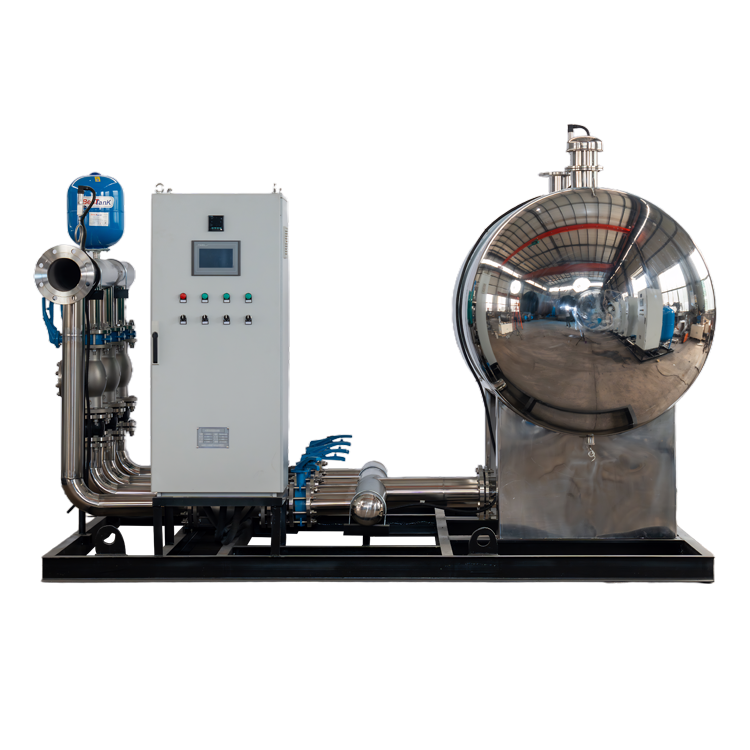
 Non-Negative Pressure Variable Frequency Water Supply UnitThe non-negative pressure variable frequency water supply unit provides pressurized water supply based on the municipal water network. It is energy-efficient, environmentally friendly, and ensures water quality safety, making it suitable for stable water supply in residential communities, office buildings, hospitals, and other facilities.
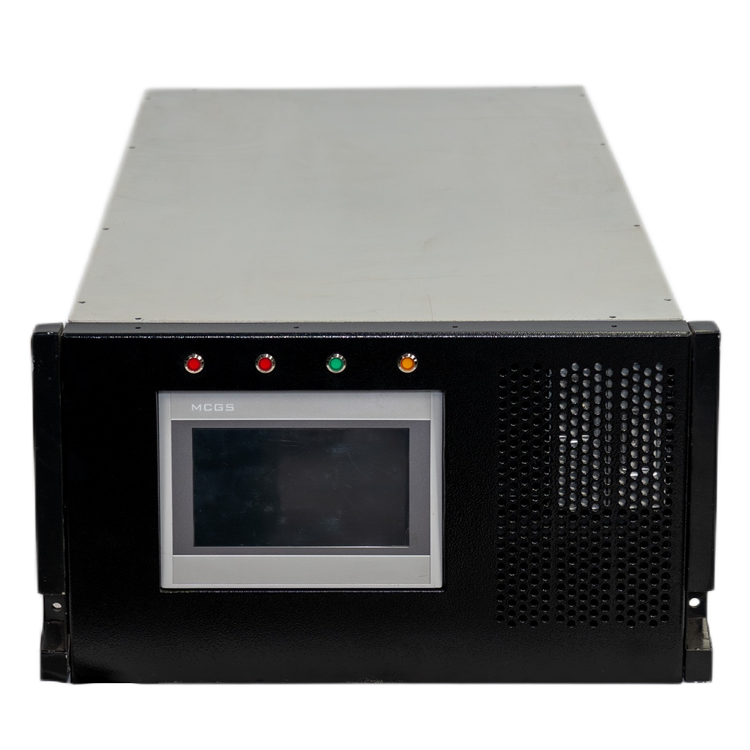
 Rack-Mounted CDUA rack-mounted CDU (Coolant Distribution Unit) is a cooling distribution device specifically designed for liquid-cooled data centers. It features a compact form factor, making it easy to deploy and maintain.
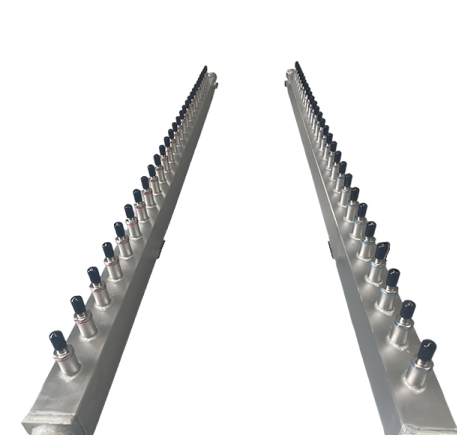
 Liquid-Cooled ManifoldThe Manifold is a pipeline device arrangedinside the server cabinet in the liquid-cooleddata center to evenly distribute the coolingmedium, which can be customized accordingto different server cabinets.
Leave A Message
If you are interested in our products and want to know more details, please leave a message here, we will reply you as soon as we can.