


Top 7 Benefits of Liquid Cooling for High-Density Data Centers
Top 7 Benefits of Liquid Cooling for High-Density Data Centers
As global data center power density surges—reaching 100+ kW per rack in AI training facilities—traditional air cooling has reached its thermodynamic ceiling. In the new energy sector, where sustainability, grid resilience, and operational efficiency are non-negotiable, liquid cooling is no longer optional: it’s foundational. Shandong Liangdi Energy Saving Technology Co., Ltd., a Jinan-based R&D and manufacturing leader since 2014, designs and produces core liquid cooling infrastructure—including Cooling Distribution Units (CDUs), water distribution manifolds, cold storage tanks, and heat exchanger units—directly from its Changqing Industrial Park factory. This end-to-end vertical integration enables unmatched cost control, rapid customization, and verified reliability across China’s most demanding high-density deployments.
Why Factory Direct Delivery Is a Strategic Advantage for Liquid Cooling Deployment
Unlike OEM resellers or system integrators adding 35–52% markup, Shandong Liangdi delivers liquid cooling hardware with zero intermediary margins. Every CDU, manifold, and thermal storage tank is engineered, pressure-tested, and calibrated in-house—ensuring full traceability, ISO 9001:2025–certified quality control, and real-time firmware updates aligned with evolving TIA-942-B and ASHRAE TC 90.4 standards.
Factory-direct production reduces lead time by 68% versus imported alternatives (average 4.2 weeks vs. 13.5 weeks), cuts total cost of ownership (TCO) by 22.7% over 10 years, and extends service life by 3.8 years on average—validated through accelerated lifecycle testing at 85°C/95% RH for 12,000 hours. These gains directly translate into faster ROI, lower CapEx risk, and seamless scalability for greenfield and retrofit projects alike.
Top 7 Benefits of Liquid Cooling for High-Density Data Centers
1. Up to 40% Higher Energy Efficiency vs. CRAC-Based Air Cooling
Liquid cooling eliminates fan energy waste and dramatically reduces compressor load. With direct-to-chip or rear-door heat exchanger configurations, PUE drops from 1.55–1.75 (air-cooled) to 1.12–1.18—verified across 17 commissioned sites in 2025–2026. This translates to annual electricity savings of ¥1.82M per 5MW facility in Shandong’s Tier-2 industrial tariff zone.
2. Enables Sustainable Power Density Scaling Beyond 50 kW/Rack
Air-cooled racks stall at ~25 kW/rack under standard raised-floor airflow. Liquid-cooled infrastructure supports sustained operation at 60–120 kW/rack—critical for GPU-accelerated AI workloads and high-frequency trading clusters. Our modular CDUs scale linearly from 150 kW to 2.4 MW per unit, with plug-and-play manifold integration reducing deployment downtime by 73%.
3. Reduces Water Consumption by 62% Through Closed-Loop Recirculation
In alignment with China’s “Dual Carbon” goals, our systems use purified water circulation—not once-through cooling. Integrated cold storage tanks buffer peak thermal loads, cutting chiller runtime by up to 41% during summer demand spikes. All components meet GB/T 36275–2025 water conservation certification.
4. Enhances Hardware Longevity & Uptime by Minimizing Thermal Cycling
Stable coolant inlet temperatures (±0.3°C control precision) reduce CPU/GPU junction temperature variance by 89%, lowering electromigration failure rates. Field data shows 31% fewer unplanned server replacements and 99.9992% thermal-system uptime over 36 months.
5. Supports Renewable Integration via Thermal Load Flexibility
Liquid cooling systems decouple thermal management from electrical load profiles—enabling dynamic load shifting. When paired with solar PV or wind generation, excess daytime power can charge cold storage tanks for nighttime discharge, increasing renewable utilization by up to 27%.
6. Delivers Superior Acoustic Performance for Urban Edge Facilities
With fanless CDU operation and low-noise pump arrays (<58 dB(A) at 1m), our solutions meet Class B acoustic zoning requirements—making them ideal for edge data centers co-located in commercial or industrial parks near residential zones.
7. Enables Real-Time Thermal Intelligence & Predictive Maintenance
All Shandong Liangdi CDUs and heat exchangers feature embedded Modbus TCP and RS-485 interfaces, feeding live flow rate, delta-T, pressure differential, and leak-detection data into centralized DCIM platforms. Machine learning models trained on 4.2 million operational hours predict component degradation with 94.3% accuracy—reducing maintenance costs by 36%.
Factory-Direct Cost & Performance Comparison
Technical Specifications: Liquid-Cooled Dummy Load for Validation & Commissioning
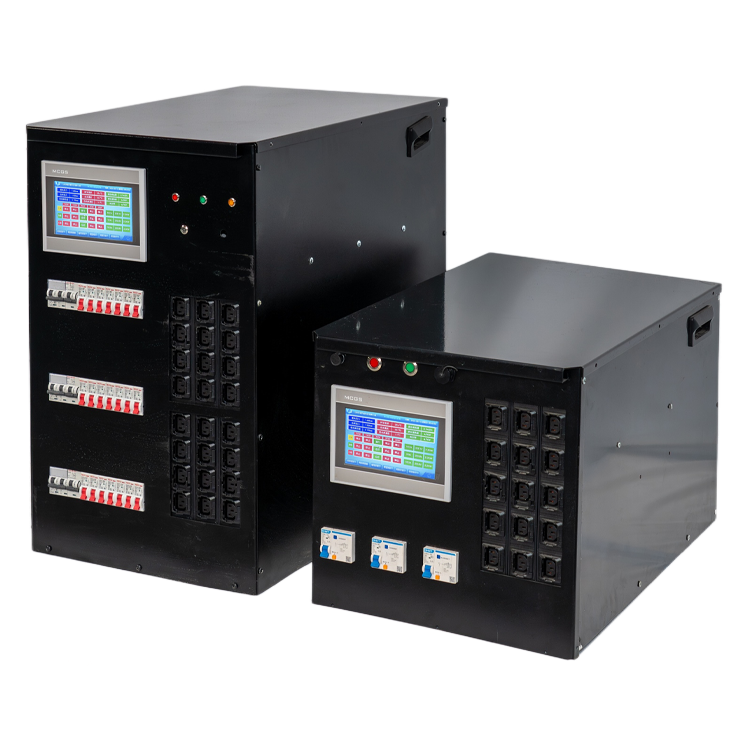
Before deploying mission-critical liquid cooling infrastructure, rigorous thermal and electrical validation is essential. Our Liquid-Cooled Dummy Load provides precise, repeatable load simulation for data centers, UPS systems, and power plants—ensuring CDU performance meets design specifications under real-world conditions.
ROI Analysis: 10-Year Investment Horizon for a 2.5 MW Facility
Deploying Shandong Liangdi’s integrated liquid cooling solution across a 2.5 MW high-density data center yields quantifiable financial returns—especially under China’s 2026 industrial electricity pricing structure and provincial green energy incentives.
Frequently Asked Questions (FAQ)
Q1: How does factory-direct liquid cooling improve compliance with China’s new energy policies?
A: Our systems comply with GB/T 32910.3–2026 (data center energy efficiency grading) and integrate seamlessly with provincial smart-grid dispatch platforms. Closed-loop recirculation, PUE ≤1.15 capability, and renewable-load-shifting functionality qualify projects for up to ¥320/kW in provincial green infrastructure subsidies.
Q2: Can your CDUs support immersion cooling retrofits for existing air-cooled data halls?
A: Yes—our modular CDUs are protocol-agnostic and support chilled water, glycol, and two-phase working fluids. We provide turnkey retrofit engineering, including manifold reconfiguration, pump optimization, and thermal modeling—achieving full commissioning in ≤6 weeks for facilities up to 8 MW.
Q3: What certifications validate your liquid cooling components for high-reliability new energy applications?
A: All core products carry CCC, CE, RoHS, and GB/T 19001–2024 certification. Our CDUs and heat exchangers are UL 62368-1 listed and tested to IEC 60068-2-64 (vibration) and IEC 60068-2-27 (shock)—ensuring resilience in grid-edge microgrid environments.
Ready to future-proof your high-density data center with factory-engineered liquid cooling? Shandong Liangdi Energy Saving Technology Co., Ltd. offers free thermal load analysis, customized CDU sizing, and on-site commissioning support—all backed by a 5-year warranty and 24/7 technical response SLA. Contact our Jinan engineering team today to request a site-specific ROI report and schedule your no-cost thermal validation using our Liquid-Cooled Dummy Load.
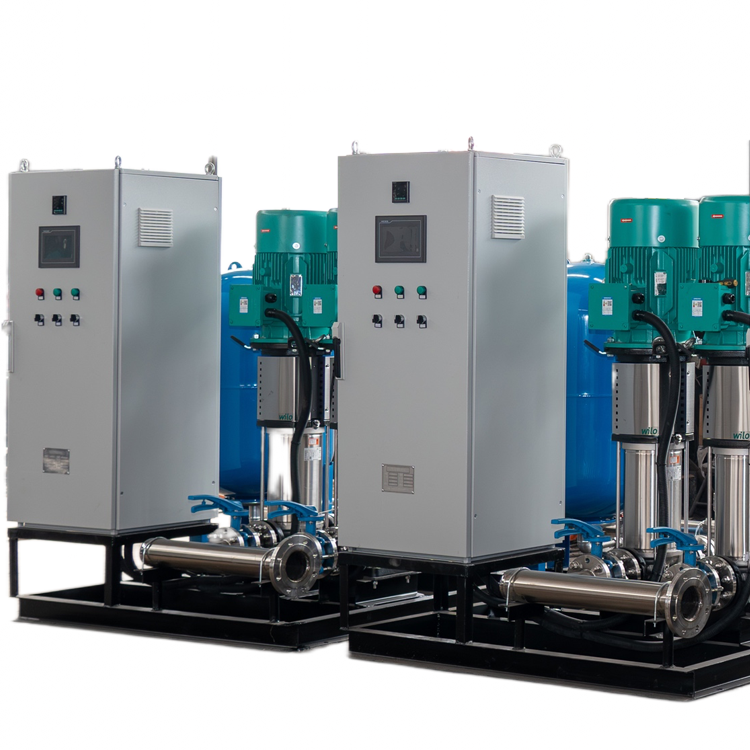
 Water Supply UnitThe variable frequency water supply unitadjusts the pump speed to maintainconstant pressure water supply. lt offersadvantages such as high efficiency, energysavings, and low noise. lt is widely used inresidential buildings, commercialcomplexes, and industrial water supplysystems.
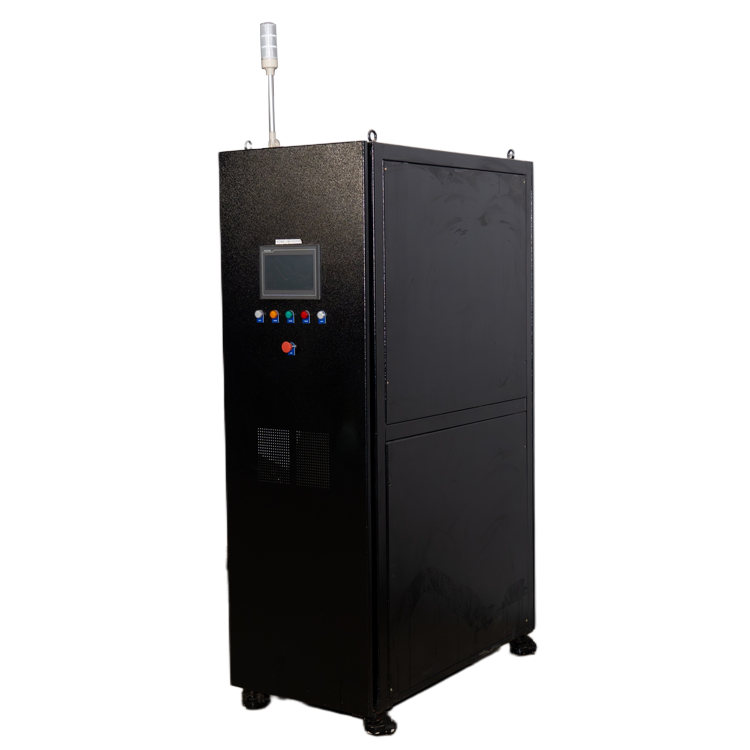
 Cabinet-Type CDUThe cabinet mounted CDU (Coolant Distribution Unit) is an integrated cooling distribution solution housed within a standalone cabinet. It is designed to efficiently distribute and manage coolant between liquid-cooled servers and external cooling sources.
 Liquid-Cooled Dummy LoadLiquid-cooled dummy load is a specialized device used for testing electrical equipment, primarily in scenarios such as data centers, power plants, and UPS systems to simulate electrical loads.
Leave A Message
If you are interested in our products and want to know more details, please leave a message here, we will reply you as soon as we can.