


ROI Analysis: Upgrading to Energy-Saving Cooling Units
Energy-saving cooling is moving from option to necessity
As data centres face rising energy costs and stricter efficiency targets, ROI analysis has become essential when evaluating energy-saving cooling units.
For operators seeking lower operating expenses and reliable thermal management, advanced CDU and heat exchange solutions offer measurable long-term value.
This shift matters to the new energy sector because power efficiency, carbon control and resilient infrastructure are now tightly connected.
In modern facilities, ROI analysis is no longer about purchase price alone. It measures energy savings, uptime protection, maintenance reduction and sustainability gains.
Why ROI analysis now shapes cooling upgrade decisions
Several trend signals show why upgrading to energy-saving cooling units is accelerating across data centre projects.
Higher rack density increases thermal loads. AI computing expands heat concentration. Electricity price volatility raises pressure on operating budgets.
At the same time, investors and regulators expect lower PUE, better water management and stronger emissions accountability.
These factors make ROI analysis a practical tool for comparing legacy cooling systems with efficient CDU, manifold and heat exchanger upgrades.
Main forces behind the trend
What a stronger ROI analysis should include
A useful ROI analysis for cooling upgrades combines technical and financial metrics. Simple capital cost comparison is not enough.
- Initial equipment and installation cost
- Annual electricity savings
- Reduced water use where applicable
- Maintenance frequency and service life
- Downtime risk reduction
- PUE improvement and carbon performance
For example, a modern CDU can improve heat exchange efficiency and stabilize supply temperature under changing loads.
That performance may reduce chiller burden, cut auxiliary power consumption and lower the hidden cost of unstable thermal control.
A simple evaluation framework
An effective ROI analysis often follows four stages, from baseline measurement to post-upgrade validation.
- Measure current cooling energy consumption and thermal performance.
- Estimate upgrade impact on efficiency, reliability and maintenance.
- Model payback period, lifecycle cost and emissions reduction.
- Track actual performance after deployment and adjust operations.
How advanced cooling units create value beyond electricity savings
Energy-saving cooling units deliver financial returns in several ways, not only through lower power bills.
First, precise temperature control protects servers and supports stable operation in high-load conditions.
Second, efficient heat transfer can support denser IT deployment without major space expansion.
Third, modular system design often simplifies maintenance and future scaling.
This wider value is important in ROI analysis because cooling infrastructure influences capacity planning, service continuity and sustainability reporting.
In related building systems, efficient water delivery also matters. Solutions such as the Non-Negative Pressure Variable Frequency Water Supply Unit show how variable frequency control supports stable, energy-efficient utility performance.
Although used in residential communities, office buildings and hospitals, the same energy-saving logic supports broader infrastructure efficiency goals.
The impact of cooling upgrades across business operations
Upgrading cooling systems affects more than the mechanical room. It changes cost structure, resilience and long-term asset value.
- Operations benefit from lower energy use and better thermal stability.
- Maintenance teams gain from predictable performance and fewer emergency events.
- Sustainability programs gain better support for carbon and efficiency targets.
- Expansion planning becomes easier when cooling capacity is more efficient and modular.
For companies in the new energy ecosystem, these effects are especially relevant because digital infrastructure and energy management are increasingly integrated.
What deserves close attention before making the upgrade
A strong ROI analysis should test assumptions carefully. Overestimated savings or ignored integration costs can weaken results.
- Check compatibility with existing cooling loops and control systems.
- Review part-load efficiency, not only peak performance values.
- Assess service access, spare parts and maintenance intervals.
- Include water quality, pressure stability and heat exchanger performance.
- Model different electricity price scenarios and load growth paths.
These checks help distinguish short-lived savings claims from durable lifecycle value.
A practical decision matrix
A forward-looking response for efficient data centre growth
The direction is clear. Data centre cooling is becoming smarter, more measurable and more closely tied to energy strategy.
That is why ROI analysis should be updated regularly, not treated as a one-time procurement calculation.
Start with a detailed baseline. Compare current and target performance. Prioritize upgrades with visible savings and resilience benefits.
When supported by experienced engineering, advanced CDU, water distribution and heat exchange solutions can strengthen both efficiency and competitiveness.
For organizations planning sustainable infrastructure upgrades, the next step is clear: build a data-based ROI analysis and align cooling investment with long-term energy goals.
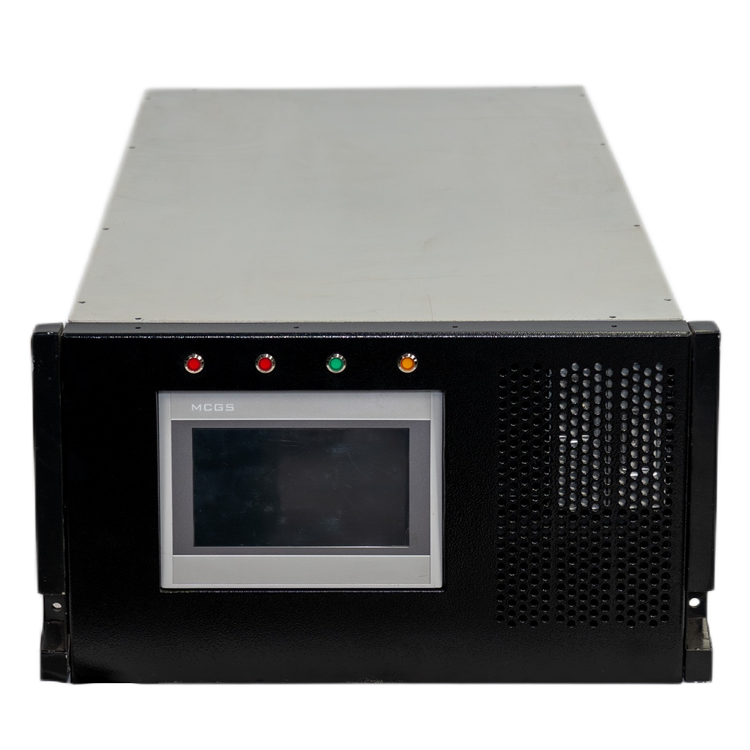
 Rack-Mounted CDUA rack-mounted CDU (Coolant Distribution Unit) is a cooling distribution device specifically designed for liquid-cooled data centers. It features a compact form factor, making it easy to deploy and maintain.
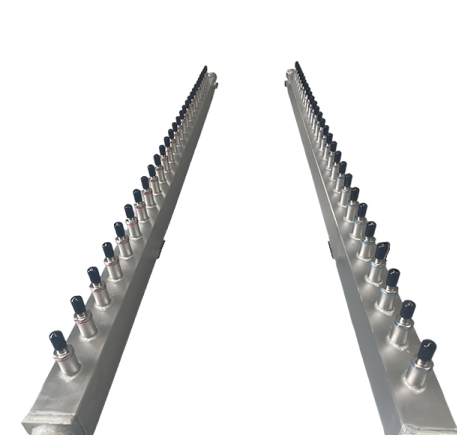
 Liquid-Cooled ManifoldThe Manifold is a pipeline device arrangedinside the server cabinet in the liquid-cooleddata center to evenly distribute the coolingmedium, which can be customized accordingto different server cabinets.
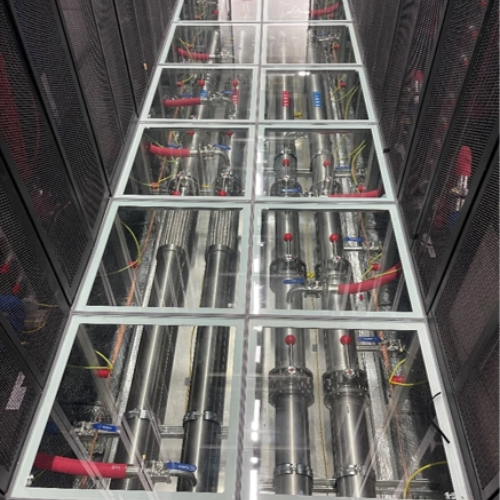
 Liquid Cooling Prefabricated PipesLiquid cooling prefabricated piping is a piping assembly designed and manufactured specifically for liquid cooling secondary systems. It is commonly used in liquid cooling data centers and can significantly shorten construction periods, improve project safety, enhance installation quality, and reduce project costs.
Leave A Message
If you are interested in our products and want to know more details, please leave a message here, we will reply you as soon as we can.