


What Are the Early Signs of Heat Exchanger Fouling?
Heat exchanger fouling can quietly reduce efficiency, raise energy costs, and threaten the reliability of cooling systems in new energy and data centre applications. Understanding what are the signs of heat exchanger fouling and how to detect it is essential for preventing unplanned downtime, maintaining stable thermal performance, and extending equipment life. In this article, we explore the early warning signs and practical ways to identify fouling before it becomes a serious operational problem.
Why early fouling matters more than many operators expect
The core search intent behind what are the signs of heat exchanger fouling and how to detect it is practical. Readers usually want to know how to spot trouble early, what data confirms it, and when action is necessary.
For managers and technical teams in data centres and new energy projects, the real concern is not the definition of fouling. It is the business risk: efficiency loss, unstable cooling, higher pumping costs, service interruption, and shortened equipment life.
That is why the earliest signs deserve attention. Fouling rarely appears first as a dramatic failure. More often, it shows up as small performance drift that looks manageable until thermal margins become too narrow.
In CDU systems, water distribution manifolds, and heat exchanger units, even a modest deposit layer can reduce heat transfer. Once that happens, the system must work harder to maintain the same cooling output.
What are the earliest signs of heat exchanger fouling?
The first warning sign is usually declining thermal performance. If the exchanger is no longer removing or transferring the expected amount of heat under similar operating conditions, fouling should be considered early.
Another common sign is a rising approach temperature. When the temperature difference between process fluid and cooling medium increases more than normal, it often means the heat transfer surface is becoming less effective.
Operators may also notice higher pressure drop across the exchanger. As deposits build inside channels or tubes, flow resistance increases, which can force pumps to consume more energy to maintain circulation.
In some systems, outlet temperature becomes harder to control. You may see slower response to load changes, frequent adjustment of valves, or a steady drift away from the designed cooling setpoint.
Energy consumption is another strong indicator. If pumps, chillers, or associated cooling equipment are drawing more power without a corresponding increase in thermal load, fouling may be reducing overall system efficiency.
Visual and maintenance clues can also help. Discoloration, suspended solids, scaling residue, biological slime, or recurring filter contamination often suggest that fouling conditions are already developing upstream or inside the exchanger.
Which operating data should you watch first?
If you want to know what are the signs of heat exchanger fouling and how to detect it, start with trend data rather than one-time readings. Fouling is easier to identify from gradual deviation than from isolated measurements.
The most useful indicators are inlet and outlet temperatures on both sides, pressure drop across the exchanger, flow rate, pump power, and overall heat transfer performance compared with baseline commissioning values.
Among these, temperature trend stability is especially important. If load remains similar but the exchanger needs a larger temperature difference to achieve the same duty, the heat transfer surface is probably being impaired.
Pressure drop trends are equally valuable. A stable rise over time, especially without flow changes or control valve issues, often points to internal accumulation of scale, particulate matter, corrosion products, or biofilm.
Flow imbalance in connected manifolds or secondary loops can also reveal fouling-related restrictions. In data centre liquid cooling applications, this matters because uneven distribution can affect rack-level thermal stability and redundancy planning.
How to distinguish fouling from other performance problems
Not every temperature deviation means fouling. Similar symptoms can come from sensor error, improper valve position, air entrainment, poor water quality control, insufficient flow, or changes in process heat load.
The best way to separate fouling from other issues is to compare several indicators together. A simultaneous rise in approach temperature, pressure drop, and energy use is more convincing than any single symptom alone.
You should also compare current operating data with a verified clean-condition baseline. Without that reference, teams may normalize degraded performance and miss the fact that the exchanger has slowly moved away from design intent.
Inspection of water chemistry is another useful checkpoint. High hardness, suspended particles, microbial growth risk, corrosion by-products, or poor filtration performance often support the diagnosis that fouling is the underlying cause.
When possible, scheduled internal inspection confirms the pattern. Tube-side deposits, plate surface films, sludge, or scaling visible during maintenance provide direct evidence and help determine which fouling mechanism is dominant.
Why fouling develops in new energy and data centre cooling systems
In modern cooling infrastructure, fouling often results from a combination of water quality, operating temperature, material compatibility, and system design. It is rarely caused by one factor alone.
Particulate fouling comes from suspended solids, construction residue, corrosion products, or inadequate filtration. Scaling develops when dissolved minerals precipitate onto heat transfer surfaces, especially where temperature conditions encourage deposition.
Biological fouling becomes more likely when water treatment is inconsistent or low-flow zones allow microbial growth. In closed or semi-closed loops, even small contamination events can spread and gradually affect thermal performance.
Design details matter too. Narrow channels, low-velocity areas, poor air removal, and difficult-to-clean configurations can all increase fouling sensitivity. This is particularly relevant in compact, high-efficiency exchanger units used in critical cooling applications.
For facilities with continuous uptime requirements, such as data centres, the tolerance for unnoticed fouling is low. Small losses in heat transfer can quickly erode operating margin during high ambient conditions or peak computing loads.
Practical ways to detect fouling before it becomes serious
The most effective approach is routine condition monitoring tied to baseline performance. Record clean-condition temperatures, pressure drop, and flow after commissioning, then compare actual operation against that reference on a fixed schedule.
Set alert thresholds for key changes rather than waiting for alarms tied only to final temperature limits. A moderate increase in pressure drop or approach temperature can justify investigation before service quality is affected.
Use water quality monitoring as an early warning tool. Conductivity, hardness, suspended solids, microbiological indicators, and corrosion-related parameters can reveal developing conditions that encourage fouling long before severe thermal loss appears.
Maintenance teams should also inspect filters, strainers, and side-stream cleaning components regularly. Repeated debris loading often signals a broader contamination issue that may already be influencing exchanger surfaces.
Where digital monitoring is available, trend analysis and simple performance dashboards make detection faster. Tracking deviations over weeks or months helps teams recognize deterioration patterns that are easy to miss during daily operations.
For critical installations, combine operating data with planned inspection intervals. This reduces guesswork and allows cleaning to be scheduled based on evidence, not just on a fixed calendar or after performance has already declined too far.
When should you clean or intervene?
Intervention should begin when performance drift starts affecting efficiency, control stability, or operating margin, even if the system has not yet failed. Waiting for severe symptoms usually increases total cleaning cost and business disruption.
A good trigger is a clear, sustained deviation from baseline values that cannot be explained by load or instrumentation. If pressure drop continues rising and thermal performance keeps falling, action should not be postponed.
The right response depends on exchanger type and fouling mechanism. It may involve mechanical cleaning, chemical cleaning, water treatment correction, filtration upgrades, flow balancing, or adjustments to operating conditions.
Just as important, teams should address root cause after cleaning. Otherwise, the exchanger may return to service clean but begin fouling again quickly, leading to repeated downtime and unnecessary maintenance expense.
How better equipment selection reduces fouling risk
Detection is essential, but prevention starts with design and product choice. Heat exchanger units should match the real thermal load, water quality conditions, cleaning strategy, and maintainability requirements of the application.
For data centre and energy-saving cooling systems, integrated solutions such as CDUs, manifolds, storage tanks, and matched exchanger units can improve monitoring consistency and hydraulic control, which helps limit fouling-related stress.
Material selection, channel design, service access, instrumentation layout, and water treatment compatibility all influence how easily fouling can be managed over the equipment life cycle. These factors deserve attention during project planning, not only during maintenance.
Manufacturers with design, production, and service capability can often help operators define practical monitoring points, cleaning access requirements, and performance baselines that make future fouling detection much more reliable.
Conclusion
If you are asking what are the signs of heat exchanger fouling and how to detect it, the short answer is this: watch for declining heat transfer, rising approach temperature, increasing pressure drop, unstable outlet temperatures, and unnecessary energy growth.
The most useful detection method is not guesswork but disciplined trending. Compare present data with clean-condition baselines, verify water quality, inspect supporting components, and intervene before thermal performance loss becomes an operational threat.
In new energy and data centre cooling applications, early detection protects more than a single heat exchanger. It supports system reliability, energy efficiency, maintenance planning, and the long-term value of the entire cooling infrastructure.
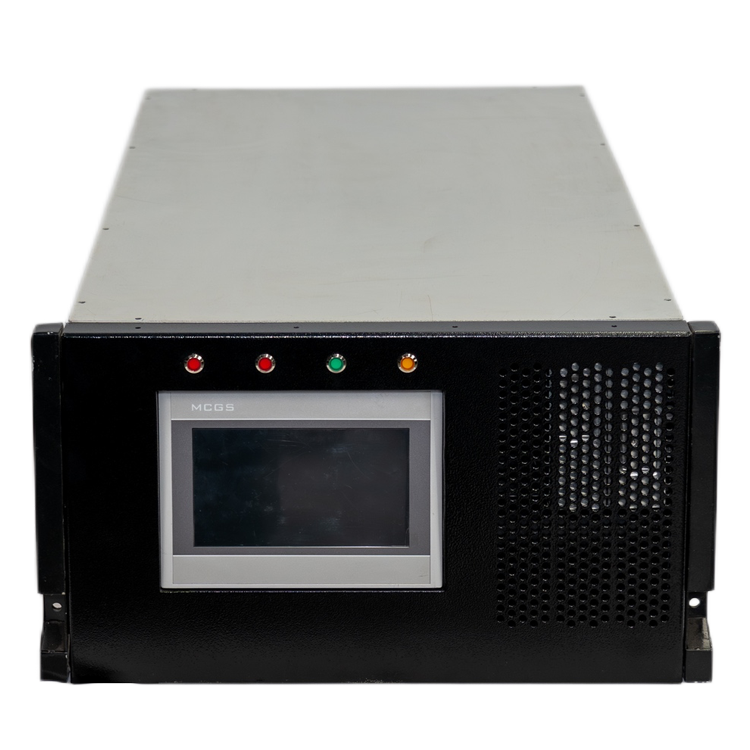
 Rack-Mounted CDUA rack-mounted CDU (Coolant Distribution Unit) is a cooling distribution device specifically designed for liquid-cooled data centers. It features a compact form factor, making it easy to deploy and maintain.
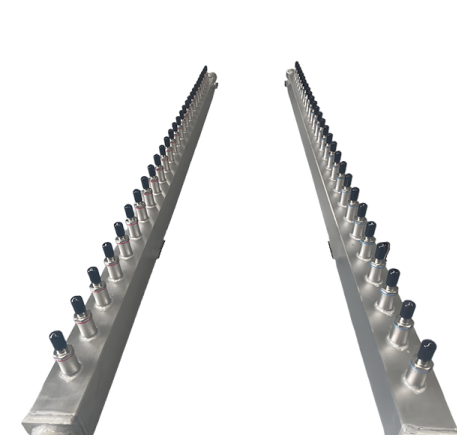
 Liquid-Cooled ManifoldThe Manifold is a pipeline device arrangedinside the server cabinet in the liquid-cooleddata center to evenly distribute the coolingmedium, which can be customized accordingto different server cabinets.
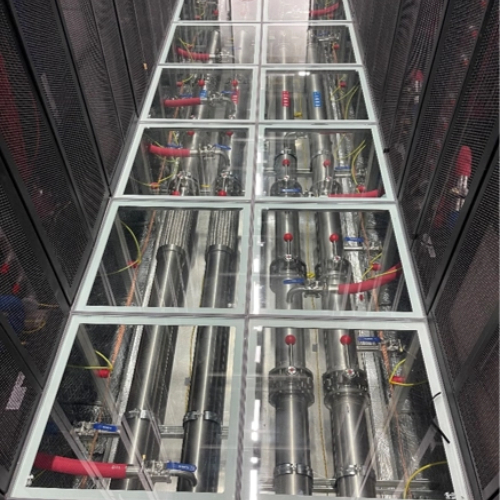
 Liquid Cooling Prefabricated PipesLiquid cooling prefabricated piping is a piping assembly designed and manufactured specifically for liquid cooling secondary systems. It is commonly used in liquid cooling data centers and can significantly shorten construction periods, improve project safety, enhance installation quality, and reduce project costs.
Leave A Message
If you are interested in our products and want to know more details, please leave a message here, we will reply you as soon as we can.