


AI Data Center Cooling Solutions: How to Match Cooling Architecture to GPU Density
Why GPU Density Changes the Cooling Decision
AI clusters no longer behave like traditional server rooms. As rack power rises, cooling choices affect uptime, energy efficiency, and future expansion at the same time.
That is why AI data center cooling solutions should be matched to actual GPU density, not selected from a generic data center standard.
In practice, the real question is not whether cooling is needed. It is which architecture stays stable when workloads spike, heat becomes concentrated, and electricity costs remain volatile.
For companies focused on energy-saving infrastructure, this is also a new energy issue. Better thermal control reduces wasted power, lowers PUE pressure, and supports more disciplined use of chilled water resources.
In Real Projects, Density Is Only the Starting Point
Two facilities may report similar rack density but still need different AI data center cooling solutions.
One may run steady training loads with predictable heat. Another may face bursty inference traffic, uneven rack distribution, and tighter floor space constraints.
The cooling architecture should therefore be judged against several conditions:
- How much heat is concentrated in each rack and row
- Whether load changes are gradual or sudden
- How much water-side infrastructure already exists
- Whether expansion will happen within the same white space
- How tightly the site tracks energy cost and carbon targets
Manufacturers with experience in CDU, manifolds, heat exchangers, and water supply systems usually understand this interaction better, because thermal equipment never works as an isolated product.
Lower-Density AI Rooms Still Need Careful Airflow Control
When GPU density remains moderate, enhanced air cooling can still be practical. This is more common in mixed-use facilities upgrading from conventional IT rooms.
The advantage is lower disruption. Existing CRAH or chilled water systems may be reused, with improvements in containment, airflow path design, and return air management.
Even here, AI data center cooling solutions should not be treated as simple fan upgrades. Hot spots around dense GPU pods often appear before average room temperature looks problematic.
A common mistake is to size for room average heat rather than localized rack exhaust. That usually leads to unstable inlet temperatures and unnecessary fan power.
As Rack Power Rises, Liquid Cooling Becomes the More Stable Path
Once rack density moves higher, airflow alone becomes harder to control economically. This is where direct-to-chip liquid cooling often becomes the preferred option.
The reason is straightforward. Liquid carries heat more efficiently, handles concentrated thermal loads better, and reduces the dependence on very high fan speeds.
In these projects, AI data center cooling solutions depend heavily on the supporting hydraulic design. CDU selection, water quality, manifold routing, redundancy strategy, and maintenance access all affect reliability.
This is where integrated system thinking matters. Shandong Liangdi Energy Saving Technology Co., Ltd. works across CDU, water distribution manifold, heat exchanger units, and related data center cooling equipment, which aligns with this system-level requirement.
Where hybrid architectures make more sense
Some AI halls do not need a full liquid transition on day one. Hybrid cooling can fit sites where a few high-density GPU rows sit beside lower-density support clusters.
In that case, liquid cooling handles the hottest racks, while optimized air systems support adjacent equipment. This reduces retrofit pressure and protects expansion flexibility.
Different Operating Conditions Lead to Different Choices
The table below shows why AI data center cooling solutions should be matched to operating behavior, not just hardware nameplate values.
Energy Strategy Matters as Much as Heat Removal
In many AI facilities, the cooling question is now linked directly to energy scheduling. That is especially true where utility pricing changes sharply across the day.
A practical example is using a Cold Storage Tank within air conditioning systems to store cooling energy during off-peak hours and release it during peak demand.
This does not replace core AI data center cooling solutions. It strengthens them by improving load management, reducing peak electrical stress, and making chilled water production more economical.
That approach fits the broader energy-saving direction of modern data center infrastructure, where thermal resilience and power optimization are planned together.
What Gets Misjudged Before Deployment
Several errors appear repeatedly when selecting AI data center cooling solutions.
- Treating similar GPU models as identical thermal loads under all workloads
- Comparing only capital cost while ignoring maintenance access and water-side upgrades
- Assuming future rack density will stay close to current deployment plans
- Overlooking the response time needed during sudden training bursts
- Focusing on server cooling while neglecting plant-side energy efficiency
These mistakes usually come from evaluating equipment in isolation. Real performance depends on the full loop, from chip plate to distribution piping to heat rejection.
A Practical Way to Match Architecture to Density
A workable decision process is usually simpler than it looks, provided the site data is clear.
- Map present and planned rack density by zone, not by room average
- Measure load behavior, including spikes, duty cycle, and thermal clustering
- Check whether existing chilled water, CDU, and manifold layouts can scale cleanly
- Evaluate peak electricity exposure and whether thermal storage can improve economics
- Set maintenance, redundancy, and water quality rules before final equipment sizing
The best AI data center cooling solutions are rarely the most aggressive on paper. They are the ones that fit actual density, support expansion, and keep energy use under control over time.
Before locking the architecture, it is worth comparing site conditions, cooling paths, and long-term operating constraints in one framework. That usually leads to a more reliable and efficient decision.
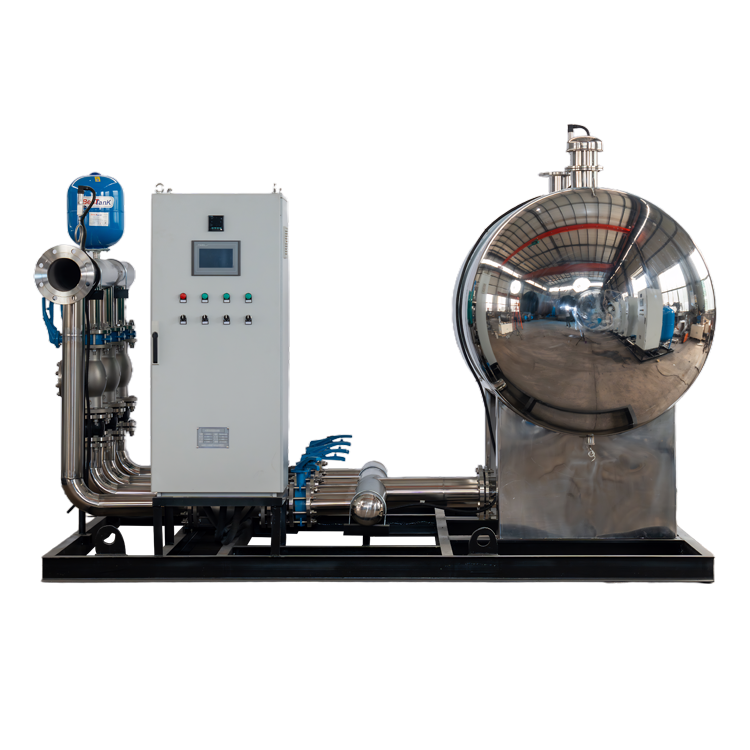
 Non-Negative Pressure Variable Frequency Water Supply UnitThe non-negative pressure variable frequency water supply unit provides pressurized water supply based on the municipal water network. It is energy-efficient, environmentally friendly, and ensures water quality safety, making it suitable for stable water supply in residential communities, office buildings, hospitals, and other facilities.
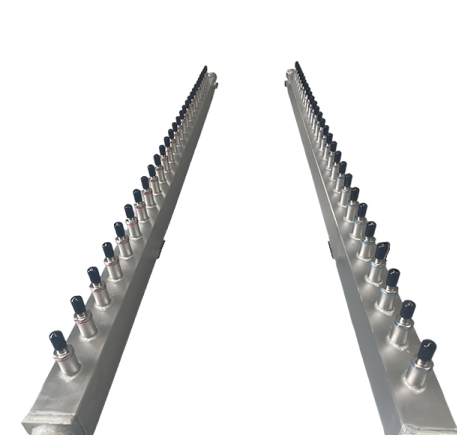
 Liquid-Cooled ManifoldThe Manifold is a pipeline device arrangedinside the server cabinet in the liquid-cooleddata center to evenly distribute the coolingmedium, which can be customized accordingto different server cabinets.
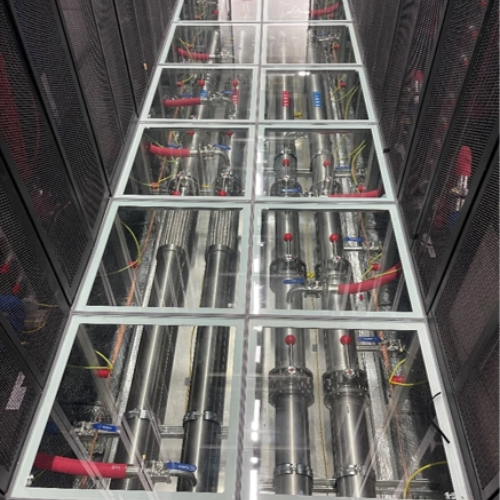
 Liquid Cooling Prefabricated PipesLiquid cooling prefabricated piping is a piping assembly designed and manufactured specifically for liquid cooling secondary systems. It is commonly used in liquid cooling data centers and can significantly shorten construction periods, improve project safety, enhance installation quality, and reduce project costs.
Leave A Message
If you are interested in our products and want to know more details, please leave a message here, we will reply you as soon as we can.