


Vertical vs Horizontal Cold Storage Tank: Design, Cost & Space Comparison
In the engineering phase of any industrial cooling or cryogenic facility, the choice between a Vertical Cold Storage Tank and a Horizontal Cold Storage Tank is one of the most consequential decisions. This choice affects everything from initial foundation costs and piping complexity to the long-term thermal stratification of the stored medium.
While the primary function—preserving low-temperature liquids—remains the same, the mechanical footprint and hydraulic performance differ vastly. This guide provides a definitive comparison to help you select the configuration that aligns with your facility's constraints and operational goals.
1. Structural Design & Engineering Foundations
The most obvious difference lies in how gravity and internal pressure act upon the vessel.
Vertical Cold Storage Tanks
Vertical tanks are typically designed as upright cylinders with dish, torispherical, or flat bottoms. In cryogenic applications, these are often double-walled with a vacuum-jacketed annular space.
Support System: They usually rest on concrete plinths, steel legs, or a skirt.
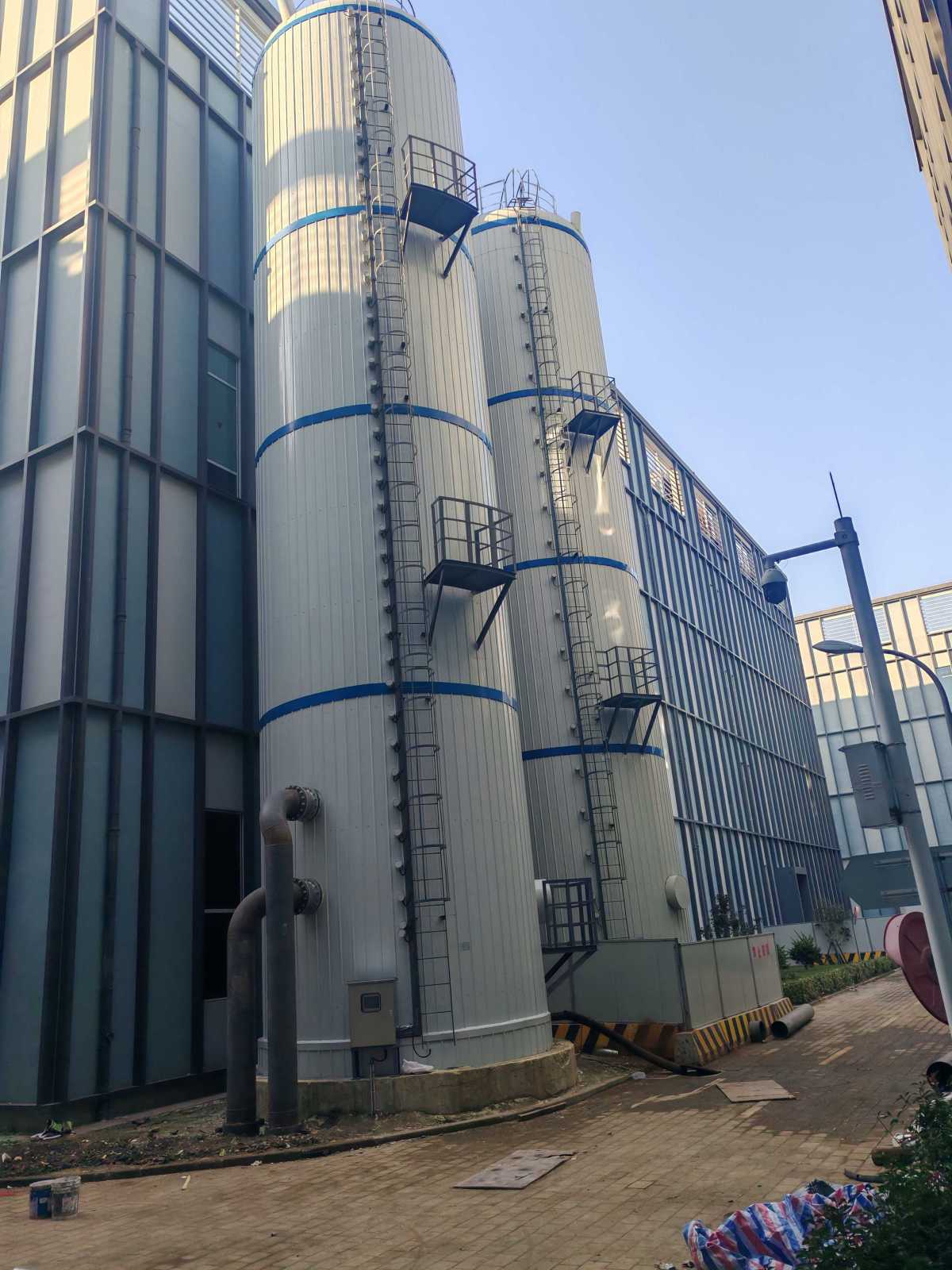
Thermal Stratification: Vertical orientation is superior for maintaining a "thermocline" (a sharp temperature gradient), which is critical for chilled water storage systems to prevent the mixing of warm return water and cold supply water.
Horizontal Cold Storage Tanks
Horizontal tanks are cylindrical vessels laid on their side, supported by two or more "saddles."
Support System: The saddle design must account for longitudinal thermal expansion and contraction, which is more pronounced in horizontal layouts.
Structural Integrity: For very large volumes, horizontal tanks distribute weight over a larger surface area, which can be advantageous in regions with poor soil bearing capacity.
[Sub-topic Hub] Seismic Design Requirements for Tall Vertical Cryogenic Tanks
High-aspect-ratio vertical tanks face unique challenges in earthquake-prone zones. This technical brief explores sloshing dynamics, base-anchor engineering, and center-of-gravity calculations required for seismic compliance:
? [Seismic Design Requirements for Tall Vertical Cryogenic Tanks]
2. Space Efficiency & Footprint Comparison
Space is often the deciding factor in urban industrial zones or integrated plant upgrades.
The "Stacking" Advantage: In modern industrial architecture, vertical tanks allow engineers to utilize "dead space" above the facility, whereas horizontal tanks often dictate the entire floor plan of a utility room.
3. Cost Analysis: CapEx vs. OpEx
Understanding the financial trade-offs requires looking beyond the price tag of the steel vessel itself.
Capital Expenditure (CapEx)
Fabrication: Vertical tanks are often more expensive to manufacture due to the specialized equipment needed to weld and lift tall sections. However, they require smaller (though deeper) foundations.
Installation: Horizontal tanks are easier to transport via rail or road without specialized "oversize" permits, potentially lowering logistics costs.
Operational Expenditure (OpEx)
Pumping Energy: Horizontal tanks may require higher pumping energy if the liquid level head pressure fluctuates significantly.
Evaporation Losses: In cryogenic storage (LNG, $LN_2$), vertical tanks have a smaller liquid surface area relative to their volume compared to half-full horizontal tanks. This reduced surface area can lead to lower heat ingress and decreased boil-off gas (BOG) rates.
[Sub-topic Hub] Foundation Engineering: Cost Comparison of Slab vs. Deep Piles
Vertical tanks exert high point-loads, while horizontal tanks spread weight. We break down the soil-testing requirements and civil engineering costs associated with each setup:
? [Foundation Engineering: Cost Comparison of Slab vs. Deep Piles for Cold Storage]
4. Media Suitability & Process Integration
The physical state and chemical nature of your Cold Storage Tank contents often dictate the orientation.
Best for Vertical Tanks:
Cryogenic Liquids ($LN_2, LOX, LAR$): The lower surface-area-to-volume ratio at the liquid-gas interface minimizes vaporization.
Stratified Chilled Water: Essential for HVAC thermal energy storage (TES) to keep cold and warm water separated by density.
High-Pressure Gases: Vertical cylinders handle internal pressure cycling with more uniform stress distribution.
Best for Horizontal Tanks:
Low-Profile Refrigerants: Systems where the tank must stay below a certain height for safety or aesthetic regulations.
Frequent Clean-in-Place (CIP): Horizontal tanks are often easier to access for internal mechanical cleaning or inspection in food-grade cold storage.
Mobile/Transportable Storage: Almost all intermodal cold storage containers are horizontal to maintain a low center of gravity during transit.
[Sub-topic Hub] Optimizing Liquid Withdrawal in Horizontal Refrigerant Receivers
Horizontal tanks face unique "dead volume" issues. Learn how to optimize dip-tube design and vortex breakers to ensure consistent liquid supply in industrial refrigeration loops:
? [Optimizing Liquid Withdrawal in Horizontal Refrigerant Receivers]
Summary Selection Checklist
To determine the right Cold Storage Tank for liangditech.com projects, use this quick-reference framework:
Is land area restricted? Choose Vertical.
Is height restricted by local code or indoor ceilings? Choose Horizontal.
Is the medium a cryogenic liquid with high boil-off risk? Choose Vertical.
Is the soil quality poor or unable to support deep point-loading? Choose Horizontal (to spread the load).
Is thermal stratification (thermocline) required? Choose Vertical.
By aligning these design factors with your specific site conditions, you can optimize both the physical footprint and the thermal efficiency of your cold storage infrastructure.
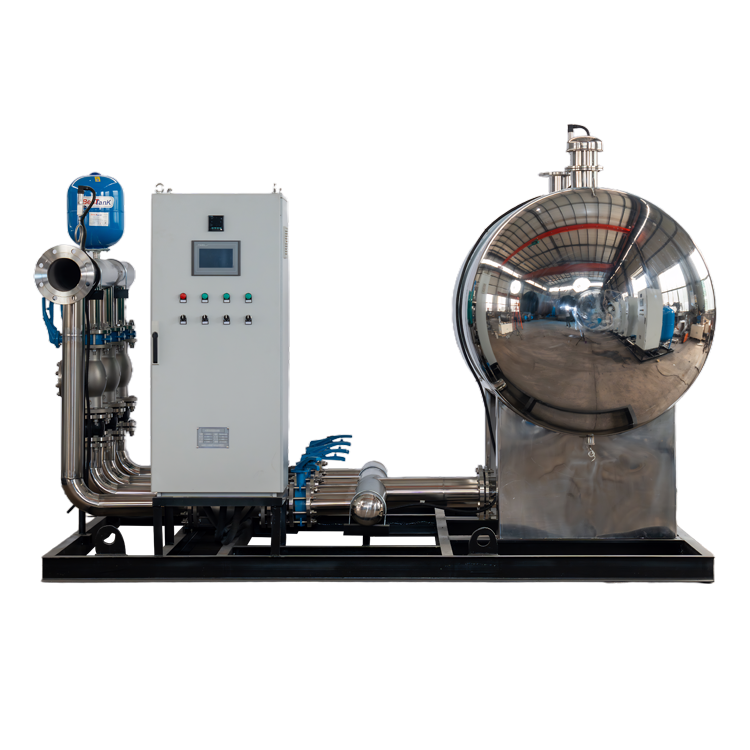
 Non-Negative Pressure Variable Frequency Water Supply UnitThe non-negative pressure variable frequency water supply unit provides pressurized water supply based on the municipal water network. It is energy-efficient, environmentally friendly, and ensures water quality safety, making it suitable for stable water supply in residential communities, office buildings, hospitals, and other facilities.
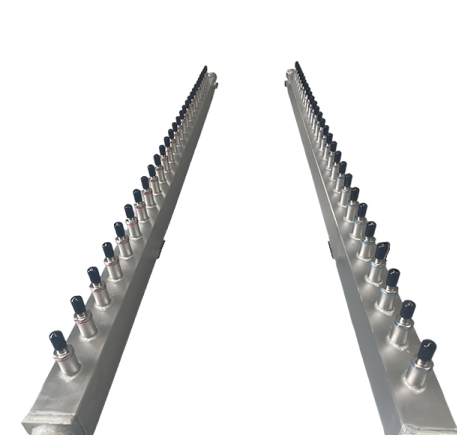
 Liquid-Cooled ManifoldThe Manifold is a pipeline device arrangedinside the server cabinet in the liquid-cooleddata center to evenly distribute the coolingmedium, which can be customized accordingto different server cabinets.
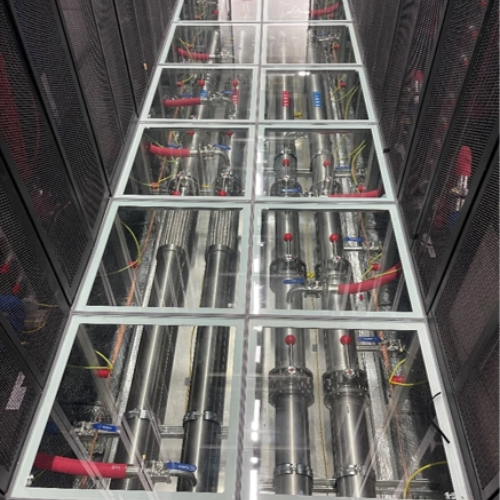
 Liquid Cooling Prefabricated PipesLiquid cooling prefabricated piping is a piping assembly designed and manufactured specifically for liquid cooling secondary systems. It is commonly used in liquid cooling data centers and can significantly shorten construction periods, improve project safety, enhance installation quality, and reduce project costs.
Leave A Message
If you are interested in our products and want to know more details, please leave a message here, we will reply you as soon as we can.