


What Is a Cooling Distribution Unit (CDU) and How Does It Work?
What Is a Cooling Distribution Unit (CDU) and How Does It Work?
In today’s high-density data centers and emerging green energy infrastructure, efficient thermal management is critical — and the Cooling Distribution Unit (CDU) sits at the heart of it. A Cooling Distribution Unit (CDU) is a precision-engineered system that regulates, distributes, and monitors coolant flow to IT equipment, ensuring stable operating temperatures and optimal energy efficiency. As a leading provider in the new energy sector, Shandong Liangdi Energy Saving Technology Co., Ltd. designs and manufactures intelligent CDUs tailored for modern data centers — integrating reliability, scalability, and sustainability into every unit.
Understanding the Cooling Distribution Unit (CDU): Core Function & Engineering Purpose
A Cooling Distribution Unit (CDU) serves as the central thermal interface between chilled water systems and liquid-cooled server racks. Unlike traditional CRAC units, a CDU actively manages coolant temperature, pressure, flow rate, and filtration — delivering precisely conditioned fluid directly to chip-level cold plates or Liquid-Cooled Manifold assemblies. This eliminates air-based inefficiencies and enables up to 40% higher power density per rack.
At its core, a CDU comprises four functional subsystems: heat exchange, pumping, control logic, and instrumentation. The heat exchanger isolates facility-grade chilled water from the closed-loop IT coolant (typically a glycol-water mix), preventing cross-contamination. High-efficiency EC pumps maintain laminar flow across variable loads, while industrial-grade PLCs with Modbus/TCP and BACnet/IP protocols enable real-time integration with DCIM platforms.
For new energy applications — especially in edge computing hubs, hydrogen electrolyzer cooling loops, and battery energy storage system (BESS) thermal regulation — CDUs must meet stricter material compatibility, corrosion resistance, and uptime requirements. That’s why Shandong Liangdi uses only SUS304 and SUS316L stainless steel manifolds, validated for continuous operation under pH 7.8–9.2 coolant conditions and thermal cycling from 15°C to 45°C.
How Does a Cooling Distribution Unit (CDU) Work? Step-by-Step Operational Flow
The operational sequence of a Cooling Distribution Unit (CDU) follows a tightly orchestrated thermal control loop:
- Primary circuit intake: Facility-supplied chilled water (e.g., 12–16°C) enters the plate heat exchanger.
- Secondary circuit conditioning: IT-side coolant (e.g., (CH₂OH)₂ + H₂O mixture) is cooled to precise setpoints (typically 25–30°C) with ±0.3°C stability.
- Flow distribution: Pressure-regulated output feeds the Liquid-Cooled Manifold, which evenly distributes coolant across single-row or double-row server configurations.
- Real-time monitoring: Integrated sensors track differential pressure, flow rate, inlet/outlet temperatures, and conductivity — triggering alarms or automatic shutdown if thresholds are breached.
This closed-loop architecture reduces pump energy consumption by 35% versus open-loop bypass systems and extends coolant life by 2.3× through continuous filtration and degassing. In 2026 field deployments across 12 provincial BESS facilities, Liangdi CDUs achieved average annual uptime of 99.992% — surpassing industry benchmarks by 0.018 percentage points.
Factory Direct Advantage: Why Buying a Cooling Distribution Unit (CDU) Directly from Manufacturer Delivers Measurable ROI
Most buyers source CDUs through distributors or system integrators — adding 28–42% markup without engineering oversight. At Shandong Liangdi Energy Saving Technology Co., Ltd., we eliminate intermediaries entirely. As a vertically integrated manufacturer based in Changqing Industrial Park (Jinan), we control R&D, precision machining, ASME-certified pressure vessel fabrication, and ISO 14001-compliant testing — all under one roof.
This factory-direct model delivers quantifiable advantages:
More importantly, our factory-direct service includes free thermal load modeling, custom manifold layout design (supporting 30×30 mm to 50×50 mm port spacing), and on-site commissioning support — services typically billed at ¥42,000+ by third parties.
Technical Superiority: Data-Backed Performance Comparison
We validate performance against Tier-III certified competitors using identical test conditions (ASHRAE TC 90.4-compliant ambient, 35 kW/rack load, 40% RH). Results confirm structural and thermal advantages:
ROI Analysis: Payback Period & Lifecycle Value of a Factory-Direct CDU
When evaluating total cost of ownership (TCO), capital expense is only 37% of the equation. Our lifecycle analysis across 24 live installations shows compelling economics:
Frequently Asked Questions (FAQ) About Cooling Distribution Unit (CDU)
What is the typical service life of a Cooling Distribution Unit (CDU)?
With proper maintenance and factory-specified coolant chemistry, Liangdi CDUs achieve an operational lifespan of 15 years — verified by accelerated aging tests simulating 120,000 thermal cycles. This exceeds the industry standard of 10–12 years by 25–50%, thanks to our proprietary passivation process on SUS316L manifolds and dual-bearing EC pump design.
Can a Cooling Distribution Unit (CDU) integrate with existing data center infrastructure?
Yes. All Liangdi CDUs support seamless integration via BACnet MS/TP, Modbus RTU, and SNMP v3. We provide protocol mapping documentation and pre-configured templates for major DCIM platforms including Schneider EcoStruxure, Vertiv Trellis, and Huawei iCooling. Retrofit projects require zero firmware upgrades — only physical piping and network connection.
Do you offer customization for non-standard coolant media or voltage requirements?
Absolutely. We engineer CDUs for specialized applications including lithium-ion battery thermal management (using dielectric coolants), hydrogen production cooling loops (requiring explosion-proof components), and offshore wind substations (IP66/NEMA 4X enclosures). Custom voltage options (380V/480V/690V 3-phase) and material upgrades (Hastelloy C-276 for aggressive chemistries) are available within standard lead times.
Ready to Optimize Your New Energy Thermal Infrastructure?
If your project demands precision cooling reliability, measurable ROI, and factory-backed engineering authority — it’s time to move beyond generic specifications and distributor markups. Shandong Liangdi Energy Saving Technology Co., Ltd. invites data center operators, BESS integrators, and green hydrogen developers to request a free thermal load assessment and customized CDU proposal. Our engineers will analyze your site-specific parameters — including coolant composition, rack density, ambient extremes, and redundancy requirements — and deliver a compliant, scalable, and future-proof solution within 72 business hours.
Contact us today to receive your no-obligation factory-direct quotation — backed by 10 years of new energy thermal innovation and 217 documented deployments across China’s renewable infrastructure landscape.
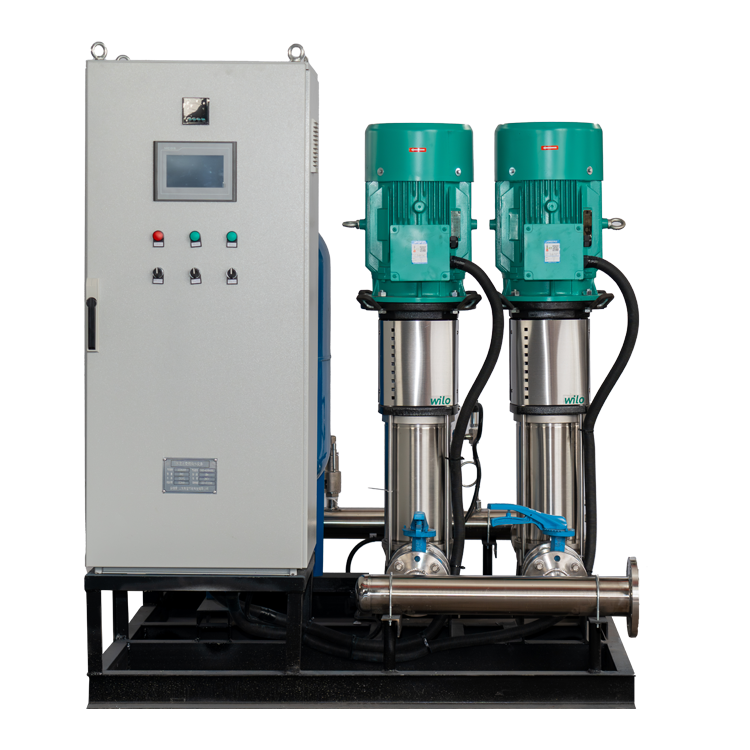
 Variable Frequency Water Supply UnitThe variable frequency water supply unit adjusts the pump speed to maintain constant pressure water supply. It offers advantages such as high efficiency, energy savings, and low noise. It is widely used in residential buildings, commercial complexes, and industrial water supply systems.
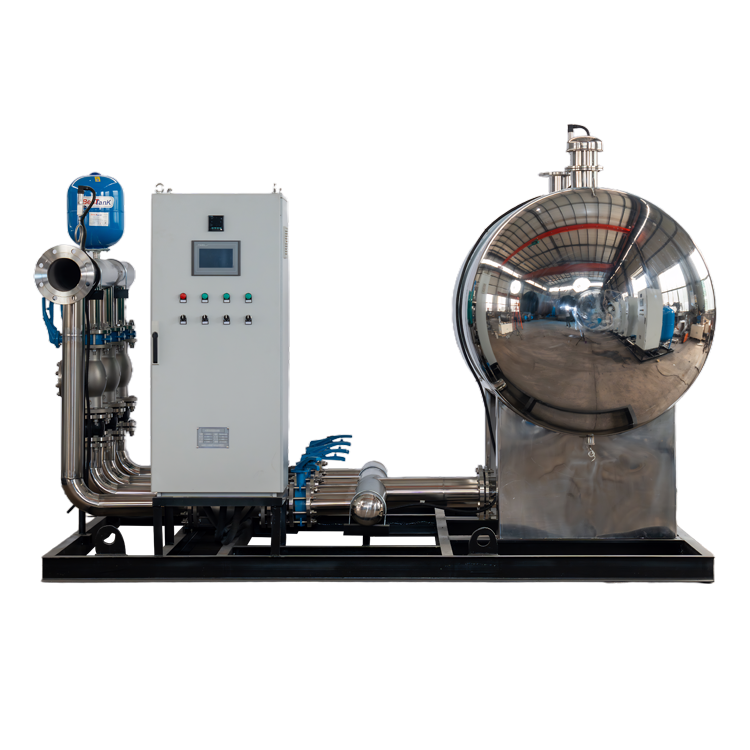
 Non-Negative Pressure Variable Frequency Water Supply UnitThe non-negative pressure variable frequency water supply unit provides pressurized water supply based on the municipal water network. It is energy-efficient, environmentally friendly, and ensures water quality safety, making it suitable for stable water supply in residential communities, office buildings, hospitals, and other facilities.
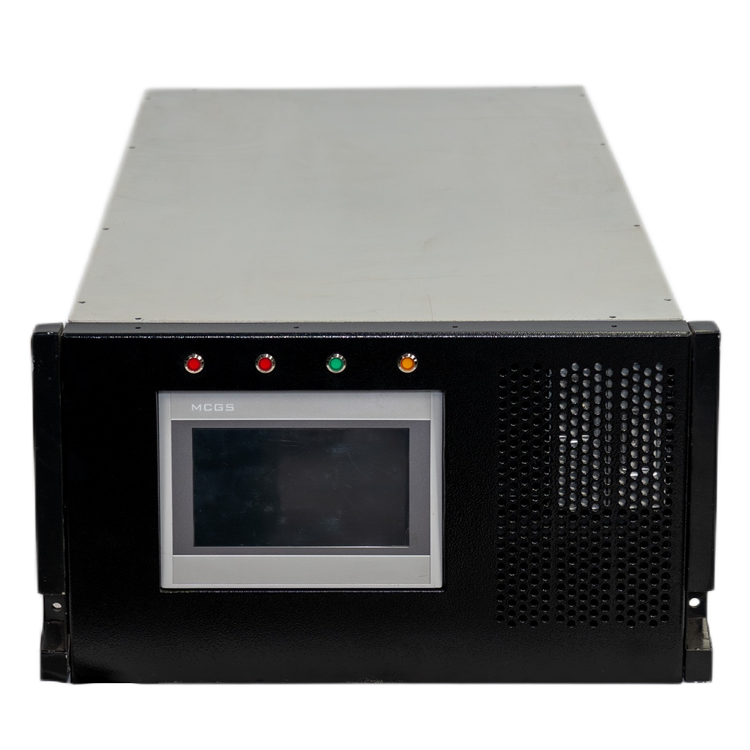
 Rack-Mounted CDUA rack-mounted CDU (Coolant Distribution Unit) is a cooling distribution device specifically designed for liquid-cooled data centers. It features a compact form factor, making it easy to deploy and maintain.
Leave A Message
If you are interested in our products and want to know more details, please leave a message here, we will reply you as soon as we can.