


Rack-Mounted CDU Procurement Checklist: Uptime, Redundancy, and Serviceability
Rack-Mounted CDU Procurement Checklist: Uptime, Redundancy, and Serviceability
For high-density data halls, a rack-mounted cooling distribution unit is no longer a peripheral accessory. It sits directly between expensive IT equipment and the facility water loop, controlling the quality, pressure, temperature, and flow of liquid delivered to the rack. That position makes a poor purchasing decision unusually costly: an undersized CDU may restrict future rack deployment, while a unit that cannot be isolated or serviced cleanly can turn a small component issue into an availability event.
When comparing a Liquid Cooling Series-Rack Mounted CDU, procurement should resist the temptation to rank quotations mainly by rated capacity or initial unit price. Those numbers matter, but they do not explain how the unit behaves during a pump fault, a sensor failure, a control-system outage, or a maintenance intervention at 2 a.m. The practical question is simpler: can the CDU keep the protected IT load within operating limits, and can technicians work on it without creating unnecessary risk?
Start With the Actual Heat-Rejection Boundary
Before requesting bids, define where responsibility begins and ends. Rack-mounted CDUs may use a facility-water-to-technology-coolant heat exchanger arrangement, or they may be specified within a broader secondary-loop design. These are not interchangeable assumptions. The available facility-water temperature, expected differential pressure, water quality requirements, allowable approach temperature, and the design temperature of the IT liquid loop should all be documented.
A nameplate cooling capacity without its associated inlet conditions has limited procurement value. A supplier may state capacity at conditions that do not match the planned data hall. Ask for the performance basis in writing: primary-side inlet and outlet temperatures, secondary-side supply and return temperatures, flow rates, pressure losses, and the assumed fluid composition. If glycol, additives, or non-water coolant is contemplated, make that explicit early; viscosity and heat-transfer properties can affect pump selection and exchanger performance.
There is also a planning issue that is frequently missed. The rack load expected at commissioning may be substantially lower than the eventual load. Buying solely for day-one demand can create a second procurement cycle when AI, HPC, or dense accelerated-computing racks arrive. Buying for a distant theoretical maximum, however, can mean paying for pump energy, space, and complexity that are not yet needed. A sensible specification asks suppliers to show stable operating control across the anticipated load range, not merely at full design duty.
Treat Redundancy as a System Decision, Not a Brochure Feature
“Redundant” can describe many different things: dual pumps, dual power inputs, redundant controllers, parallel heat exchangers, or multiple CDUs serving a zone. Procurement documents need to identify exactly which components are redundant and, equally important, whether the redundant path has enough capacity to carry the required load after a single failure.
Dual pumps are a common requirement, but the details matter. Can either pump support the specified flow and pressure independently? Does the standby pump rotate automatically to avoid long idle periods? Are check valves, isolation valves, and controls arranged so that a failed pump can be removed without draining the secondary loop? A “duty/standby” label is not sufficient evidence of maintainability.
Power resilience deserves the same scrutiny. Confirm the intended supply arrangement, the behavior after a brief power interruption, and whether the controller returns to the required operating state without manual intervention. If the site uses UPS-backed power for critical cooling controls, that interface should be clear in the electrical scope. Do not assume that a rack-mounted unit automatically receives the same power protection as the servers beside it.
At a larger scale, several smaller CDUs may provide better fault containment than one large unit, but this is not universally cheaper or more reliable. More units introduce more connections, more service points, and more controls to manage. The right architecture depends on rack criticality, physical layout, maintenance staffing, and the facility’s ability to route bypass or alternate cooling paths.
Serviceability Is Where Lifecycle Cost Usually Appears
Most CDUs look serviceable on a drawing. The difference becomes visible when a technician has to replace a pump seal, clean a strainer, calibrate a sensor, or diagnose an alarm in a live white space. Request a maintenance-access drawing rather than relying only on the overall cabinet dimensions. It should show front, rear, and side clearance needs; door-swing requirements; lifting or removal paths for major components; and the location of filters, drain points, vents, isolation valves, and electrical terminations.
A procurement review should ask four blunt questions:
- Which routine tasks can be completed while the CDU remains online?
- What work requires isolation, draining, or a controlled shutdown?
- Can consumable or wear components be identified by part number and obtained locally or through a defined lead-time process?
- What tools, fluids, training, and access space are required for field service?
Leak management should be assessed in this same practical way. Look beyond the presence of a leak detector. Find out where sensing points are located, what alarm is generated, whether a leak triggers pump shutdown or valve action, and how the decision is coordinated with the wider data center control philosophy. An overly aggressive shutdown response may protect the floor from water but remove cooling from a critical rack. A passive alarm may give operators too little time. The chosen logic should reflect the site’s risk assessment.
Make Monitoring Data Usable, Not Merely Available
A rack-mounted CDU should provide operational visibility that helps staff identify degradation before it becomes an outage. At minimum, the offered monitoring package should be reviewed for temperatures, pressures, flow, pump status, valve position where applicable, power status, fluid level, water-leak alarms, and communication health. The exact point list should be part of the technical comparison, not an afterthought added during commissioning.
Integration often creates avoidable cost late in a project. Confirm which building management system or data center infrastructure management protocol is required, whether a gateway is included, who maps the points, and whether alarm priorities can be adjusted. Ask for the communications documentation before purchase. If the vendor can demonstrate the point list, alarm definitions, and interface method at the proposal stage, it is usually a better indicator of delivery readiness than a generic statement that the product is “BMS compatible.”
Trend capability is particularly useful for interpreting fouling, declining flow, drifting differential pressure, or unstable control response. It does not replace water treatment or preventive maintenance, but it can make those activities more targeted. Procurement should clarify whether local history, remote trending, or external supervisory software is needed to retain that information.
Consider the CDU Within the Wider Cooling and Energy Strategy
Liquid cooling projects are often evaluated alongside broader energy-management decisions. Where a facility also has air-conditioning loads, thermal storage may help shift a portion of cooling production to off-peak electricity periods and release that stored cooling during demand peaks. This is a facility-level decision rather than a substitute for CDU redundancy, but it can affect the operating context around the data hall. A Cold Storage Tank is designed to store cooling energy, accumulating it when electricity demand is lower and releasing it when cooling demand rises. Its value depends on the actual plant configuration, tariff structure, and control sequence.
For energy-conscious projects, especially those balancing variable renewable electricity availability with critical computing loads, procurement should separate two questions: how efficiently the CDU transfers heat, and how the facility produces or stores cooling energy. Combining them into one vague “energy-saving” claim makes technical comparisons less clear.
Evaluate the Supplier’s Engineering Scope Before Comparing Price
The supplier should be able to discuss the complete hydraulic path, not just the CDU cabinet. That includes manifolds, connection standards, control valves, water treatment boundaries, commissioning procedures, and the relationship between the CDU and the facility loop. Shandong Liangdi Energy Saving Technology Co., Ltd., based in Changqing Industrial Park in Jinan, works across CDUs, water distribution manifolds, heat-exchanger units, water supply units, and data center cooling storage equipment. For buyers, this type of broader equipment scope can be useful when interfaces between components need to be coordinated rather than assigned to several unrelated vendors.
Still, integrated scope should not reduce the level of technical challenge. Ask each bidder to identify supplied components, exclusions, site responsibilities, commissioning support, recommended spares, warranty boundaries, and escalation contacts. If a supplier proposes substitutions, require confirmation that dimensions, electrical loads, materials, controls, and performance assumptions remain suitable for the project.
Factory testing is another area where wording matters. Rather than simply asking whether the unit is tested, request the proposed test scope and records: pressure testing where applicable, functional checks for pumps and controls, alarm verification, communication checks, and confirmation of the stated operating conditions. Site acceptance should then focus on what can only be proven after installation, including flow balance, control integration, alarm routing, and maintainable access.
A More Defensible Buying Decision
The lowest-priced Liquid Cooling Series-Rack Mounted CDU can be the most expensive option if it requires excessive downtime to service, lacks usable monitoring, or has undefined responsibility at the connection boundary. A strong procurement comparison gives weight to verified operating conditions, single-failure behavior, replacement access, controls integration, spare-parts planning, and supplier commissioning support alongside capital cost.
Before issuing the purchase order, ask the preferred supplier to walk through one realistic maintenance scenario and one realistic fault scenario using the proposed configuration. If the answers depend on assumptions that are not shown in drawings, control narratives, or the scope of supply, resolve them before the equipment reaches site. That short review often reveals the difference between a CDU that is merely specified and one that can be operated with confidence.
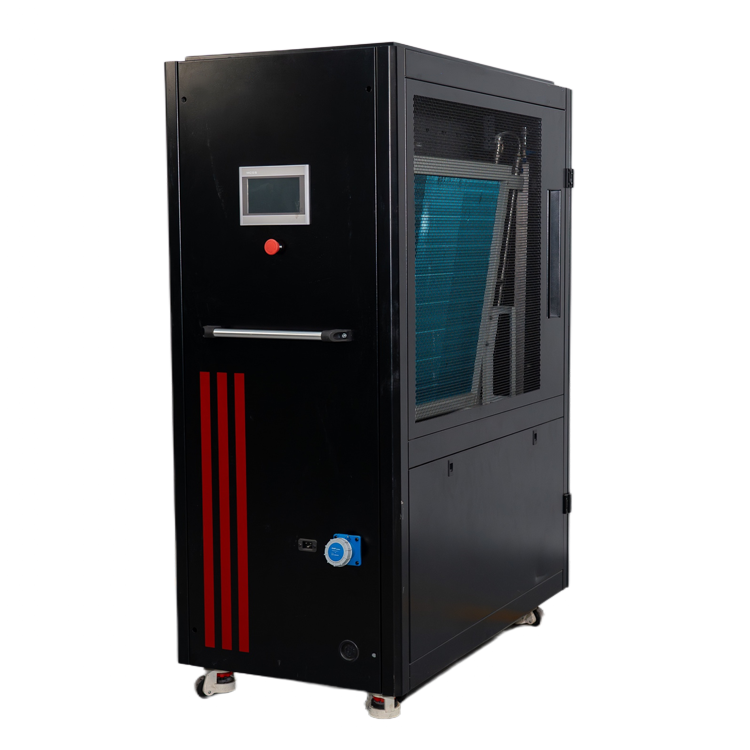
 Liquid Cooling Emergency DeviceA liquid-cooled emergency unit is a device designed to rapidly cool critical equipment or systems in emergency situations. Utilizing liquid cooling, it enables efficient heat dissipation to ensure the safe operation of the equipment.
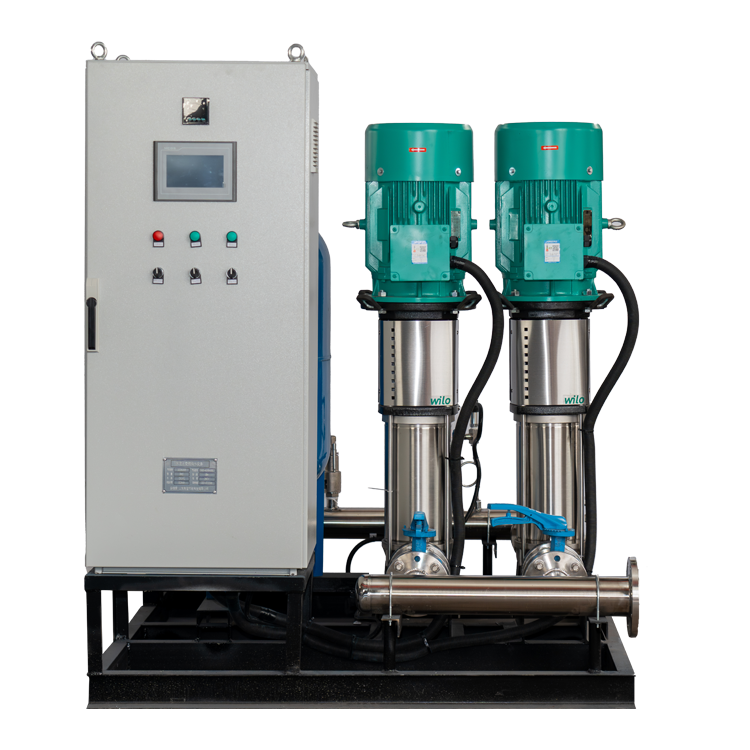
 Variable Frequency Water Supply UnitThe variable frequency water supply unit adjusts the pump speed to maintain constant pressure water supply. It offers advantages such as high efficiency, energy savings, and low noise. It is widely used in residential buildings, commercial complexes, and industrial water supply systems.
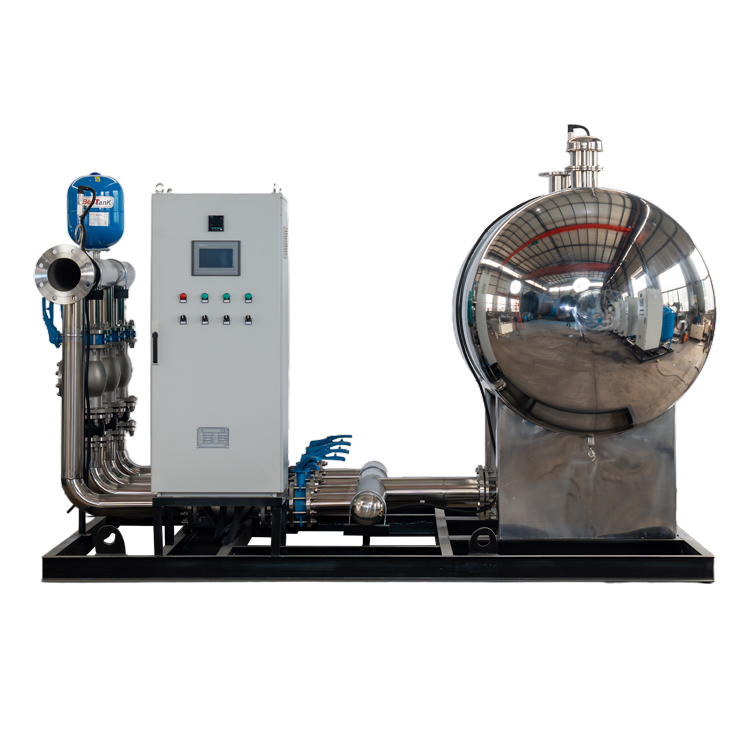
 Non-Negative Pressure Variable Frequency Water Supply UnitThe non-negative pressure variable frequency water supply unit provides pressurized water supply based on the municipal water network. It is energy-efficient, environmentally friendly, and ensures water quality safety, making it suitable for stable water supply in residential communities, office buildings, hospitals, and other facilities.
Leave A Message
If you are interested in our products and want to know more details, please leave a message here, we will reply you as soon as we can.