


Heat Exchanger Materials: Stainless Steel or Titanium
Heat exchanger material selection has become a practical design issue in new energy facilities and data centre cooling loops. Stainless steel and titanium are both established choices, but they solve different risks. The better option depends less on headline performance and more on water chemistry, operating pressure, fouling tendency, maintenance access and the expected service life of the system.
Why this decision matters now
Cooling infrastructure now supports denser loads, tighter temperature control and higher continuity requirements. In that setting, one weak heat exchanger can affect efficiency, uptime and maintenance planning across the whole station.
This is especially relevant in applications linked to energy saving, liquid cooling and water-side thermal management. Companies such as Shandong Liangdi Energy Saving Technology Co., Ltd. work across CDU systems, water distribution manifolds, cold storage tanks, heat exchanger units and water supply systems for data centres, so material choice is rarely an isolated component question.
What stainless steel and titanium really offer
At a basic level, both materials can perform well in a heat exchanger. The difference is how they behave when the environment becomes less forgiving.
Stainless steel
Stainless steel is widely used because it balances cost, strength and manufacturability. It suits many closed-loop systems with controlled water quality and predictable operating conditions.
Common grades can deliver good corrosion resistance, but their limits appear when chloride levels rise, oxygen conditions fluctuate or cleaning chemistry becomes aggressive.
Titanium
Titanium is usually chosen for harsher environments. It is highly resistant to seawater, chloride-rich media and many forms of localized corrosion that challenge stainless steel.
The material cost is higher, and fabrication demands more control. Even so, in difficult water conditions, titanium may lower total ownership risk more than it raises initial capital cost.
The comparison that actually guides selection
A useful evaluation should move beyond a simple price comparison. The table below reflects the questions that usually matter in project review.
Where new energy and data centre projects differ
In many new energy projects, the heat exchanger operates inside a broader thermal chain. That chain may include energy storage, process cooling, free cooling, chilled water loops or hybrid water systems.
Data centre environments add another layer. CDU architecture, manifold balancing and tank integration all influence flow stability and contamination risk. A material that looks economical on paper may become expensive after repeated shutdowns, plate replacement or cleaning intervention.
This is also why water-side support equipment matters. In buildings where municipal water is part of the supply path, stable pressure and water quality control help downstream thermal equipment last longer. That is where solutions such as Non-Negative Pressure Variable Frequency Water Supply Unit fit naturally into the wider system logic, especially in residential communities, office buildings and hospitals that need efficient, reliable water delivery.
When stainless steel is usually the sensible choice
Stainless steel often makes sense when the heat exchanger sits in a closed loop with treated water and stable chemistry. In these conditions, corrosion exposure is limited and lifecycle cost remains competitive.
- Closed-loop chilled water systems with controlled conductivity
- Projects where replacement access is straightforward
- Installations with strong filtration and routine monitoring
- Budgets that prioritize lower upfront cost
In practice, stainless steel works best when material selection, gasket compatibility and water treatment strategy are reviewed together instead of separately.
When titanium earns its higher price
Titanium becomes compelling when failure consequences are high or corrosion risk is difficult to control. That includes systems using poor-quality source water, elevated chloride content or demanding cleaning cycles.
- Open or semi-open cooling loops
- Marine or coastal environments
- Applications with variable makeup water quality
- Facilities where downtime carries high operating penalties
A titanium heat exchanger can also reduce uncertainty when expansion plans may change future water conditions. That reserve margin can be valuable in phased infrastructure projects.
Key checks before making the final call
Material choice improves when the review process is disciplined. Several checks usually reveal whether stainless steel or titanium is the better engineering fit.
- Measure chloride concentration, pH, oxygen exposure and cleaning chemicals
- Map expected temperature range, pressure variation and flow regime
- Estimate fouling rate and realistic maintenance intervals
- Compare replacement cost against downtime cost, not purchase price alone
- Review the heat exchanger with related equipment, including supply units and distribution hardware
That last point is often missed. A well-selected heat exchanger still underperforms if system pressure, water replenishment or flow distribution are unstable.
A practical way forward
For most projects, the right answer is not “stainless steel or titanium” in isolation. The real question is which material matches the actual water environment and the reliability target of the entire cooling system.
Start with water quality data, expected duty conditions and maintenance limits. Then compare lifecycle scenarios for each heat exchanger option. That approach gives a clearer basis for specification, budgeting and long-term system performance.
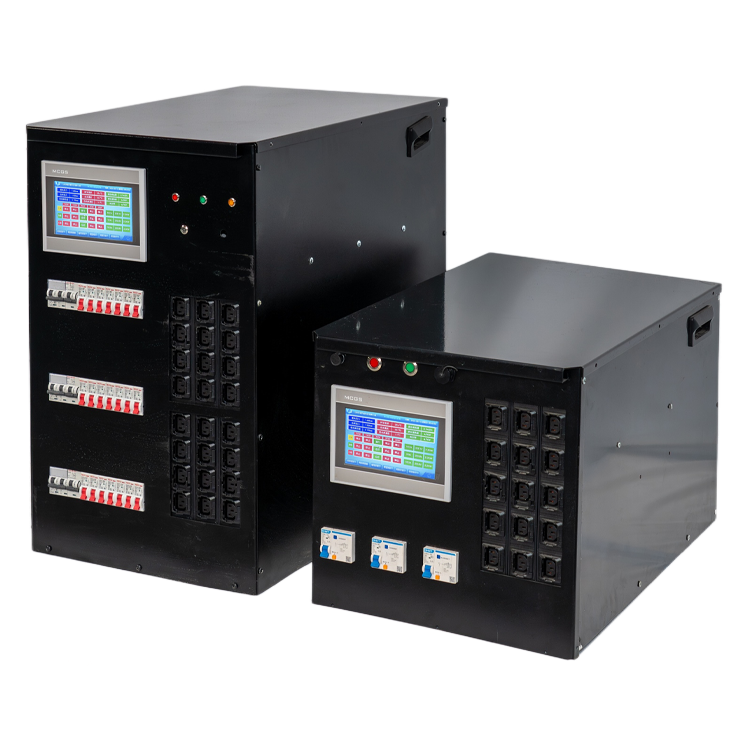
 Liquid-Cooled Dummy LoadLiquid-cooled dummy load is a specialized device used for testing electrical equipment, primarily in scenarios such as data centers, power plants, and UPS systems to simulate electrical loads.
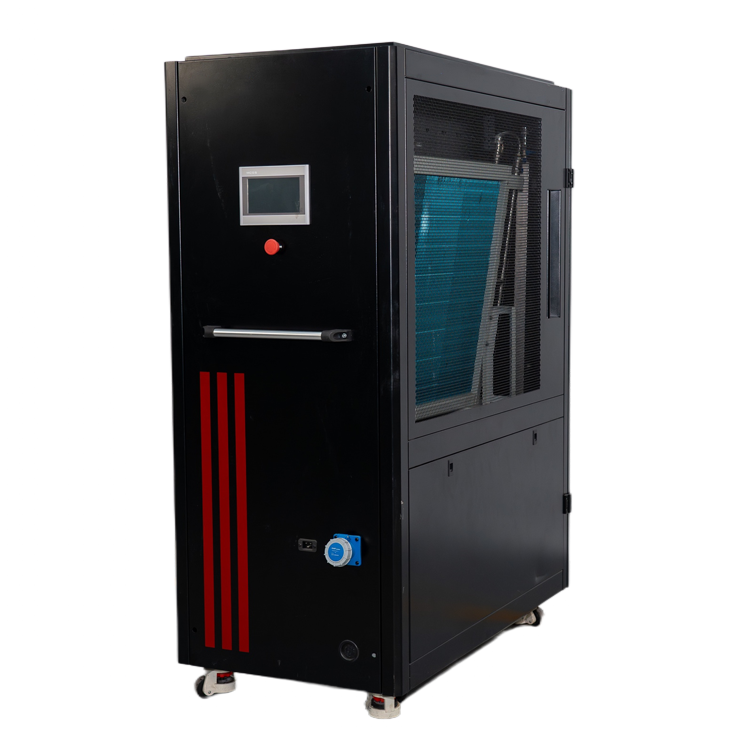
 Liquid Cooling Emergency DeviceA liquid-cooled emergency unit is a device designed to rapidly cool critical equipment or systems in emergency situations. Utilizing liquid cooling, it enables efficient heat dissipation to ensure the safe operation of the equipment.
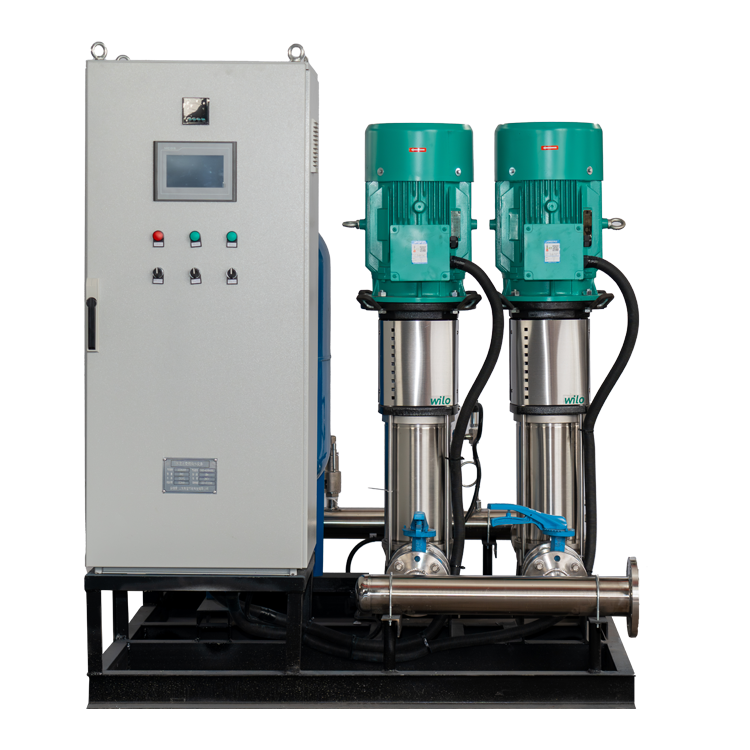
 Variable Frequency Water Supply UnitThe variable frequency water supply unit adjusts the pump speed to maintain constant pressure water supply. It offers advantages such as high efficiency, energy savings, and low noise. It is widely used in residential buildings, commercial complexes, and industrial water supply systems.
Leave A Message
If you are interested in our products and want to know more details, please leave a message here, we will reply you as soon as we can.