


Choosing Materials for a Water Supply Heat Exchanger System
Selecting the right materials for a heat exchanger system for water supply is critical for procurement teams seeking long-term efficiency, corrosion resistance and cost control. In the new energy sector, material choice directly affects system reliability, operating performance and maintenance needs. This guide explores how to evaluate material options for durable, high-performance water supply heat exchanger systems in demanding data centre and industrial applications.
Why material selection matters in a heat exchanger system for water supply
For procurement teams, the purchase price is only one part of the decision. In a heat exchanger system for water supply, unsuitable materials can trigger corrosion, leakage, scaling, pressure loss and unplanned shutdowns. These risks are especially important in new energy and liquid-cooled data centre projects, where stable thermal management supports equipment continuity and energy efficiency targets.
Shandong Liangdi Energy Saving Technology Co., Ltd. focuses on the research and development, design, production and service of CDU, water distribution manifold, data centre cold storage tanks, heat exchanger units and water supply units. This system-level experience helps buyers assess not only a single component, but also how material choice affects the entire cooling and water delivery chain.
- Water quality varies by project and directly influences corrosion resistance requirements.
- Operating temperature and pressure determine whether basic stainless steel is sufficient or upgraded grades are needed.
- Maintenance access, downtime cost and replacement complexity should be included in total cost evaluation.
Which materials are commonly used and how should buyers compare them?
The table below helps procurement teams compare common materials used in a heat exchanger system for water supply across corrosion resistance, cost pressure and practical application fit in new energy facilities.
For many procurement scenarios, SUS304 works well in treated water loops, while SUS316L is often the safer option where water chemistry is more aggressive or downtime losses are high. Buyers should avoid selecting only by unit price. In many cases, the wrong low-cost material creates higher replacement and service expenses over the project life.
How auxiliary components influence system durability
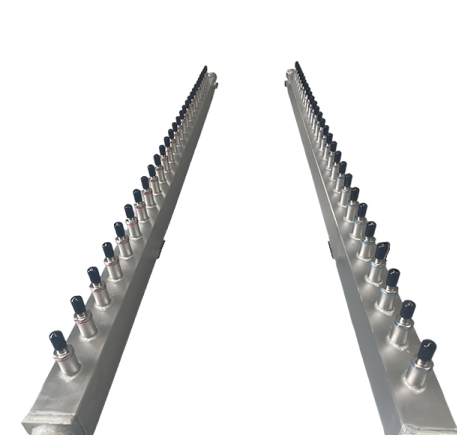
A heat exchanger system for water supply is only as reliable as its connected distribution equipment. In liquid-cooled data centre applications, manifold material, sealing compatibility and medium stability also matter. For example, Liquid-Cooled Manifold solutions used in liquid-cooled data centre environments are available in single row and double row designs, with SUS304/316L material options and media such as (CH20H)2 and H₂0. Proper matching between the manifold and the exchanger reduces uneven flow, thermal hotspots and long-term leakage risk.
Procurement checklist: what should you confirm before placing an order?
Before approving a supplier for a heat exchanger system for water supply, buyers should request clear technical and commercial confirmation. This is particularly important when delivery schedules are tight and custom engineering is involved.
- Confirm medium type, such as treated water or mixed cooling fluid, and review compatibility with plates, tubes, headers and seals.
- Verify design pressure, temperature range, flow rate and allowable pressure drop for the full operating condition.
- Ask whether the supplier can support customized dimensions, cabinet interfaces and connection standards.
- Check inspection scope, welding process consistency and basic documentation for incoming acceptance.
The following table can be used as a practical selection framework when comparing suppliers and configurations for a heat exchanger system for water supply.
A structured checklist helps buyers compare quotations on equal terms. It also prevents hidden mismatch between exchanger materials, manifold metallurgy, water chemistry and real operating load.
Common mistakes when choosing a heat exchanger system for water supply
Is the cheapest material really the lowest-cost option?
Not always. Buyers sometimes choose lower-grade metal for budget reasons, then face higher operating costs from corrosion products, fouling and earlier replacement. In new energy infrastructure, downtime can cost far more than the original material upgrade.
Can the same material be used for every water condition?
No. Water treatment quality, dissolved oxygen, chloride content and additives all change the material risk profile. A supplier with practical engineering knowledge can help define whether SUS304 is enough or whether SUS316L is the more stable option.
Do buyers need to evaluate connected distribution parts too?
Yes. In many projects, flow distribution quality is as important as exchanger performance. Some liquid cooling projects use manifold assemblies in sizes such as 30x30, 40x40 and 50x50 to evenly distribute the cooling medium and adapt to different server cabinets. If these components are not matched correctly, the overall heat exchanger system for water supply may underperform even when the exchanger itself is properly specified.
Why choose us for procurement support and custom system matching?
For procurement teams in the new energy sector, the value of a supplier lies in technical coordination as much as manufacturing. Shandong Liangdi Energy Saving Technology Co., Ltd. serves data centre cooling and water supply applications with capabilities spanning design, production and service. This supports more accurate matching among exchanger units, water distribution components and project-specific operating conditions.
- Discuss parameter confirmation, including medium, temperature, pressure and flow targets.
- Review product selection for a heat exchanger system for water supply based on water quality and installation environment.
- Confirm delivery cycle, customization scope, connection format and sample support requirements.
- Align quotation communication with lifecycle cost, not only initial procurement price.
If you are comparing materials, evaluating custom layouts or planning a liquid-cooled data centre project, you can consult our team for parameter review, product selection, lead time discussion, customized solutions and quotation support. Early technical confirmation reduces procurement risk and helps secure a more stable, efficient water supply cooling system.
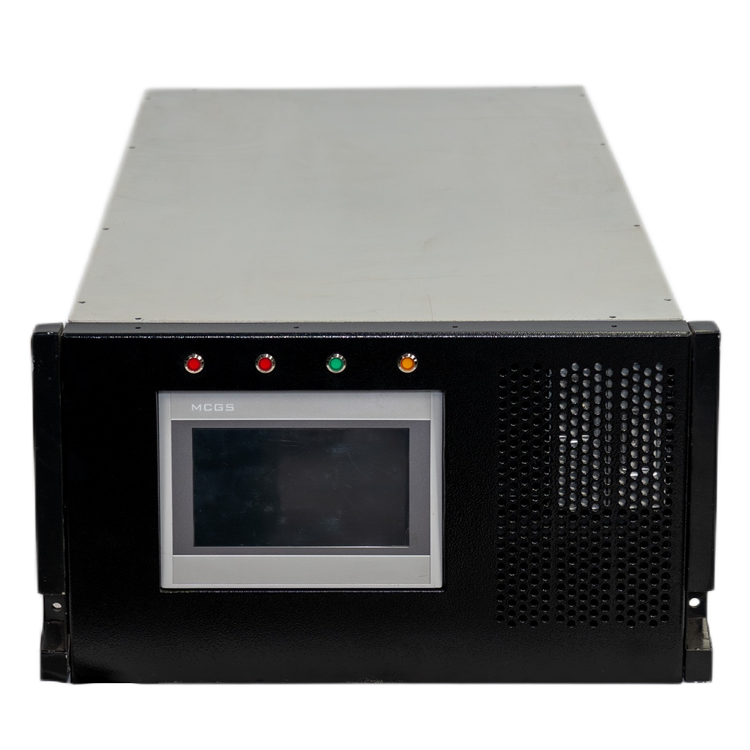
 Rack-Mounted CDUA rack-mounted CDU (Coolant Distribution Unit) is a cooling distribution device specifically designed for liquid-cooled data centers. It features a compact form factor, making it easy to deploy and maintain.
 Liquid-Cooled ManifoldThe Manifold is a pipeline device arrangedinside the server cabinet in the liquid-cooleddata center to evenly distribute the coolingmedium, which can be customized accordingto different server cabinets.
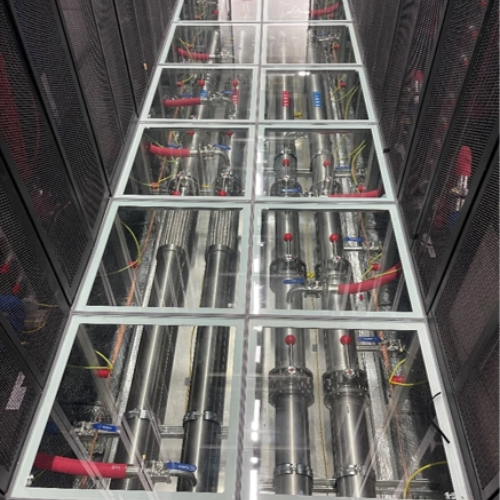
 Liquid Cooling Prefabricated PipesLiquid cooling prefabricated piping is a piping assembly designed and manufactured specifically for liquid cooling secondary systems. It is commonly used in liquid cooling data centers and can significantly shorten construction periods, improve project safety, enhance installation quality, and reduce project costs.
Leave A Message
If you are interested in our products and want to know more details, please leave a message here, we will reply you as soon as we can.